DOE allows Euro 2 fuel importation as ‘contingency measure’
Product to only be utilized in vehicle models from 2015 and earlier, traditional jeepneys, others

MANILA: The Department of Energy (DOE) has authorized the use of Euro 2-rated petroleum product as a continency measure to ensure the Philippines’ fuel supply while allowing limited flexibility for sectors that may be affected.
KEY TAKEAWAYS
What type of fuel is the DOE allowing to import as a measure against rising prices?
The DOE allowed the importation of Euro 2 fuels as a measure to combat rising prices of diesel and gasoline in the Philippines.Which fuel standard is currently in effect in the Philippines?
Currently, the DOE is enforcing a Euro 4 standard on petroleum products in the Philippines.Narrowly targeted, interim, and regulated, the energy department noted that the use of Euro2 fuels will not replace the already-enforced Euro 4 standards and was only allowed to provide a narrowly targeted response to external risks affecting specific sectors.
“We are adopting a prudent and temporary measure to help ensure an adequate and accessible fuel supply for sectors that may require limited flexibility during this period,” Energy Secretary Sharon Garin said.
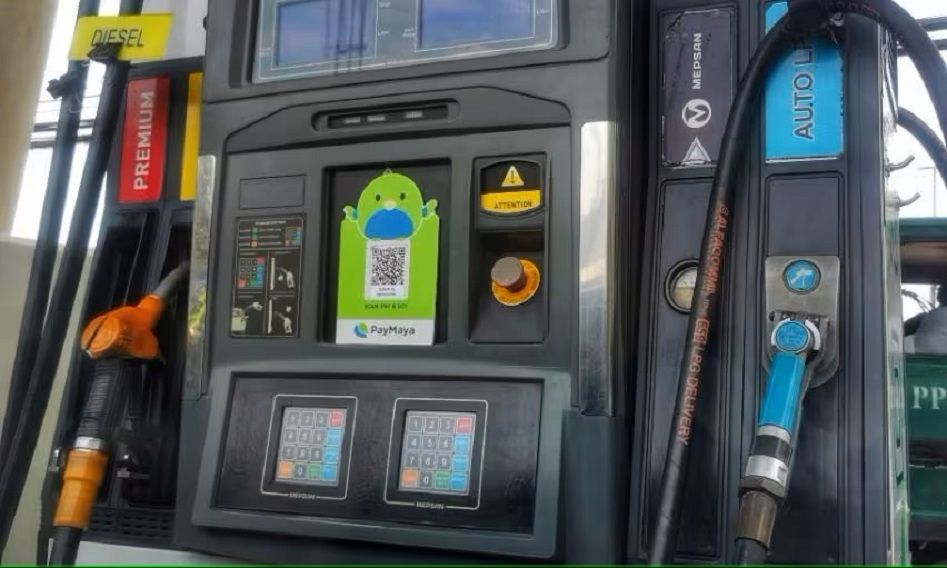 Photo by Ruben Manahan IV
“This interim authority is subject to strict quality controls, clear notification requirements, and appropriate consumer protection measures. Our objective is to uphold fuel supply security while remaining guided by safety, regulatory discipline, and the broader public interest.”
Other stories: |
Based on the Department Circular DC2026-03-0010 dated March 19, the interim use of Euro 2 fuels is limited to vehicle models 2015 and earlier, traditional jeepneys, industrial applications such as powerplants and generators, and the marine and shipping industry.
DOE said that to prevent misuse and preserve product integrity, downstream oil industry participants will be required to segregate Euro 2 and Euro 4 in terms of storage, transport, and retail systems.
Participants who are looking at offering Euro2 fuels must notify the DOE (through the Oil Industry Management Bureau) and identify the retail outlets where the said product line will be made available.
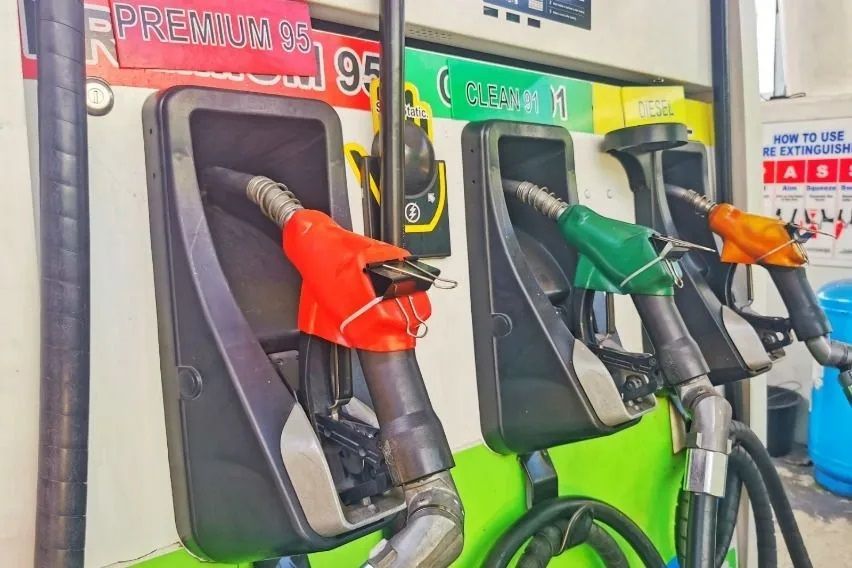 Photo by Ruben Manahan IV
Compliance will be enforced through random product sampling and testing across downstream oil facilities. Fuel adulteration, non-compliance with prescribed quality specifications, and other violations will face penalties under existing laws, rules, and regulations.
To protect consumers, the DOE requires the posting of clear and prominent advisories at fuel stations and other retail outlets offering Euro 2 products and that consumers must verify vehicle compatibility before use.
The measure was adopted after a set of consultations with oil and automotive industry players were conducted last March 16-18.
Relatedly, the government assured that it will continue to closely monitor global market developments and implement necessary measures to help protect fuel supply, preserve market stability, and safeguard the public interest.
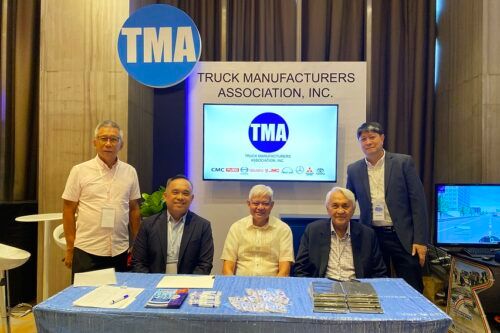
Meanwhile, the Truck Manufacturers Association said that the implementation of the temporary measure must be conducted with “utmost caution, supported by clear guidelines, proper safeguards, and comprehensive public information.”
In a statement, the local truckmaker’s group shared that vehicles compliant with Euro 4 emissions standards are engineered with advanced fuel systems and emission control technologies that are highly sensitive to fuel quality - particularly sulfur content. The use of fuels with lower rating may have a negative impact on engine performance, durability, and emissions systems due to high sulfur levels.
 Photo from Truck Manufacturers Association
TMA mentioned that the public must have “clear and accessible information” on how to determine vehicle compatibility with Euro 2 fuels — including distinctions between the aforementioned crude oil type and those that meet Euro 4 standards.
Furthermore, TMA recommended strong collaboration between industry stakeholders and relevant government agencies in informing fleet operators, transport groups, and individual vehicle owners so that they are fully aware of the implications of fuel selection on vehicle performance, maintenance, and longevity.
“While the introduction of Euro2 fuels may be necessary as a temporary measure, TMA strongly advocates that such implementation be time-bound, closely monitored, and aligned with the country’s long-term direction toward cleaner, more efficient, and environmentally sustainable fuel standards,” the organization, now steered by Robert Carlos, concluded.
To note, TMA is composed of local distributors namely:
- Isuzu Philippines Corporation
- IVECO Truck and Bus Philippines
- Ford Philippines
- Sojitz Fuso Philippines
- Hino Motor Philippines
- Isuzu Philippines Corporation
- JMC Philippines
- MAN Truck and Bus Philippines
- Mercedes-Benz Commercial Vehicles Philippines
- Mitsubishi Motors Philippines Corporation
- Toyota Motor Philippines
Also read:
CAMPI-TMA Feb. 2026 YTD sales drop by almost 10% as xEV demand grows
PH truckmaker’s group receives accolade from DENR-EMB
CAMPI-TMA Jan. 2026 sales down by 10%
Connect with us through our various social media pages:
Facebook: https://www.facebook.com/ZigWheelsPhilippines
Instagram: https://www.instagram.com/zigwheelsph/

PIMS 2026


You might also be interested in
- News
- Featured Stories
-

-
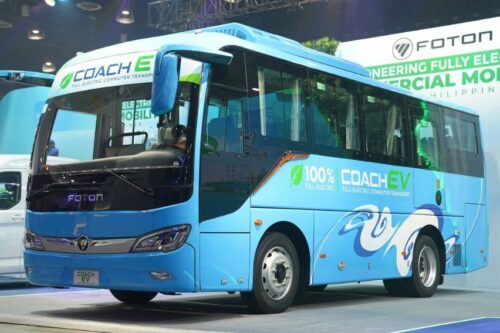
Foton PH brings out all-new Coach EVRuben Manahan IV, Jun 08, 2026
-
-
-
-


Featured Trucks
- Upcoming
- Popular
-
 Isuzu F-Series₱2.74 - 5.4 Million SRP Price ManilaMonthly Payments : ₱47,006 x 604.33 (6 Reviews) Get Exclusive Promos
 -
Isuzu N-Series₱1.47 - 2.91 Million Price on request ManilaMonthly Payments : ₱25,218 x 604.43 (7 Reviews) Get Exclusive Promos
-
-
HOWO 10W₱3.33 - 4.03 Million SRP Price ManilaMonthly Payments : ₱57,127 x 604.25 (4 Reviews) Get Exclusive Promos
-
Dongfeng Captain-E₱1.035 Million SRP Price ManilaMonthly Payments : ₱17,755 x 604.29 (7 Reviews) Get Exclusive Promos
Latest Truck Videos on Zigwheels

-
Test Driving Their Biggest Truck! + What Makes Isuzu's The Best | Zigwheels.Ph12 Feb, 2026 .
-
2025 Isuzu Truckfest – The Ultimate Showcase of Isuzu’s Best Trucks!04 Mar, 2025 .
-
Sailun COMMERCIO PRO Light Truck Commercial Tires | in partnership with Sailun Philippines28 May, 2024 .

Truck Articles From Carmudi
- journal
-
Isuzu PH gains truck sales Triple Crown for 2025Ruben Manahan IV, Jan 27, 2026
-
Maxus re-enters PH; eyes strong market presence in local truck segmentRuben Manahan IV, Oct 22, 2025
-
Thaco gets BJ Mercantile as distributor for PH marketRuben Manahan IV, Jun 26, 2025
-
Isuzu PH maintains truck sales dominance in Apr. 2025Ruben Manahan IV, May 29, 2025
-
HARI introduces 3 products at Hyundai Trucks and Bus Mobility ExpoPaulo Papa, May 06, 2025