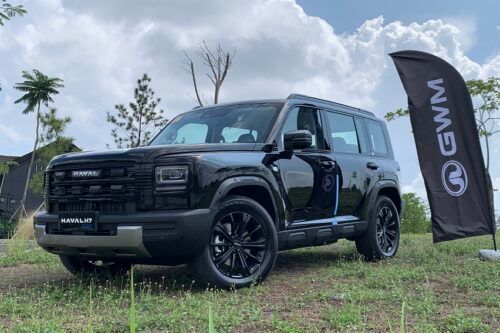
A close look into GWM’s facilities in China
Company goes heavy into sustainable mobility and automotive safety
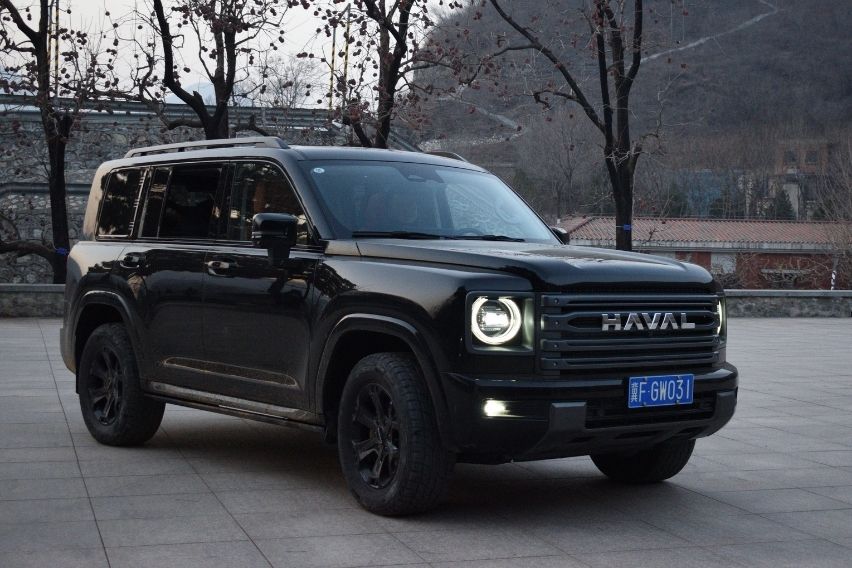
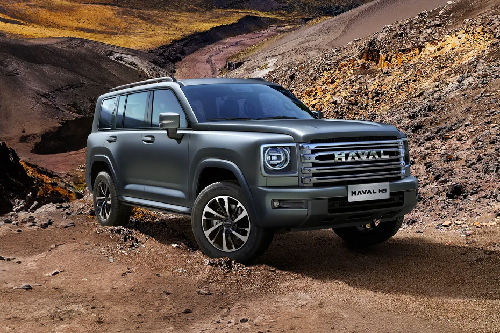
Without a doubt, most Filipinos who are regulars on social media (or the internet) have heard of Great Wall Motor. This is especially true in recent weeks, as GWM Philippines, under the management of Luxuriant Automotive Group Incorporated, has been fueling the proverbial hype train ahead of the upcoming launch of the Haval H9 sport utility vehicle (SUV) on February 4.
KEY TAKEAWAYS
What is GWM Philippines launching on February 4, 2026?
GWM Philippines is launching the Haval H9 on February 4, 2026.Where is GWM’s headquarters in China?
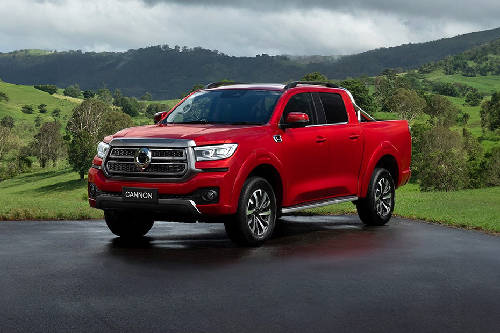
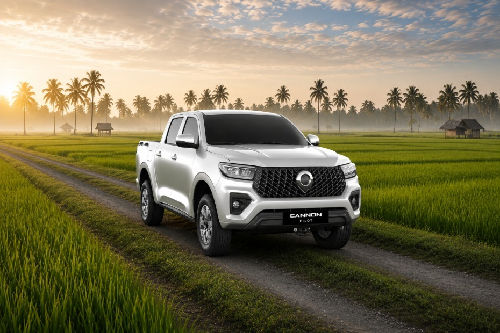
GWM’s headquarters in China is located Baoding, Hebei.For those who take time to attend local car shows and are interested in the local automotive scene, they might have had the chance see or drive locally available products such as the Cannon pickup truck.
Sure, other brands have really dug in to the Philippine car market, but GWM Philippines is still growing its presence as a serious contender. It is yet to rise as a household name, but with the spotlight now pointing at GWM Philippines as we count down the days to the Haval H9’s launch, many (especially new car buyers) who are just getting into the local car scene are itching to learn more about this brand and what goes into the bones of its automotive offerings.
Thankfully, Zigwheels Philippines and other media practitioners were invited to visit GWM’s facilities in Baoding, Hebei, China. So, to an extent, we received a taste of what makes a GWM vehicle a GWM.
GWM: When safety is primary
On the first day of the trip, we took a guided tour of GWM’s key facilities. These include a crash-test laboratory, a hydrogen-powertrain development facility, and a large test track.
The GWM Crash Test Laboratory was massive and technologically advanced, clearly demonstrating the company’s focus on safety. Many other manufacturers are content to let third parties confirm their car’s crash-worthiness, but GWM’s sheer capability with regard to in-house crash testing clearly belies the company’s investments in making sure their cars are safe.
Specific crash-test capabilities we’ve seen at the facility include tests similar to those of global New Car Assessment Programs. Interestingly enough, the company’s crash test center also has dedicated tools and areas to assess new energy vehicles (NEVs).
Sustainable mobility expertise
Next up, we hopped on a bus to the GWM Hydrogen Energy Center. In this facility, the company flexed its know-how in building automotive-grade hydrogen fuel tanks.
Plus, we got up close with GWM’s liquid hydrogen and gas hydrogen commercial vehicles, which are all part of the company’s “Forest Ecosystem” strategy. These are produced and developed by GWM-Hydrogen FTXT, a company that also falls under the Great Wall Holding Group, alongside GWM.
To note, these hydrogen-powered vehicles are already sold in China, with plans underway to make them commercially available in other parts of the world.
GWM’s blueprint for sustainable mobility, however, extends beyond hydrogen-powered commercial vehicles, and it is currently considering hydrogen passenger vehicles. The company, after all, has shown that it can build smaller hydrogen tanks that can fit into sedans, SUV models, and minivans - among others.
GWM’s thrust in sustainable mobility also goes beyond just hydrogen. In fact, the company has several hybrid and fully electric vehicles in its stable - some of which have already been launched locally.
In this regard, one notable car that we’ve had the chance to drive in China is the Poer plug-in hybrid vehicle (PHEV) - the electrified version of the Cannon pickup truck. In other markets, it is known as the Cannon Alpha, and it boasts the peppy Hi-4T PHEV powertrain, which it shares with many other GWM nameplates.
For now, GWM Philippines has yet to say when it’ll bring in the Cannon Alpha, but it could very well be an interesting answer to the likes of the BYD Shark 6 DMO and the Ford Ranger Raptor.
Other stories: |
GWM test tracks, other vehicle test labs
Speaking of test drives, we got to try out the GWM Haval H9 and other models at two different locations. One is the GWM Test Track, and the other is the GWM Off-Road Base.
The GWM Test Track is a stone’s throw away from the brand’s headquarters. It is a large facility complete with a 7.1-kilometer-long high-speed banked road that looks like a NASCAR race track, a regular race track with winding roads, a bumpy track that simulates rough terrain, and an open area suitable for autocross-type activities.
On the race track, we got to drive the GWM Haval H9, which demonstrated stability and minimal body roll. We won’t go into the nitty-gritty details here, but those curious about the seven-seater SUV should hear more about it from our upcoming Haval H9 first-impressions story.
We likewise put it through a short but fun run on an autocross course, which gave the large SUV a chance to show off its handling capabilities.
The Philippine media contingent also paid a visit to the GWM Off-Road Base - a scenic location in the mountainous countryside just outside the City of Baoding.
To note, the said facility doesn’t hold back since it uses a combination of natural off-road trails and a man-made off-road course.
In the trails, GWM test drivers put the Haval H9 to the test through a steep, very rocky run up a large hill. Media delegates were also allowed to drive the Haval H9 and other GWM models along a river-crossing route with sandy terrain in between.
As we have observed during our time at these test tracks, the GWM staffers didn’t “baby” the lineup of vehicles at their disposal.
Obviously, the drivers were confident in piloting GWM SUVs and pickup trucks, especially given that they had foreign motoring media guests aboard.
Then again, the aforementioned can be explained since they know the staggering amount of technology and engineering that goes into these models.
We got to see some of these, of course. Apart from GWM’s in-house crash test facility and its test tracks, it also has a dedicated wind-tunnel and weather simulation facility, a semi-anechoic lab for electromagnetic testing, and an in-house NVH (noise, vibration, harshness) lab - among others.
Final thoughts
Clearly, GWM’s motto - “Go With More” can be seen in how thoroughly it develops and builds its lineup of cars. Based on what we’ve seen, the company has sought out to keep everything in-house - a move that hints at the Chinese carmaker’s long-term vision of producing quality cars.
The phrase “Go With More” likewise belies its strategy on the continuous development of multiple powertrain technologies. Many brands around the world have been known to throw all of their eggs into one basket, but GWM’s powertrain portfolio is diversified enough to meet the vastly different demands of a variety of markets worldwide.
So, where does this leave the ordinary car-buyer in the Philippines? Well, if the GWM Haval H9 is priced just right, it’s a value-added purchase backed by thousands of hours of testing/development and billions of investment in automotive engineering.
Also read:
New year, new ride: GWM Haval H9
Check out the PH-spec GWM Cannon's 5 colors
Connect with us through our various social media pages:
Facebook: https://www.facebook.com/ZigWheelsPhilippines
Instagram: https://www.instagram.com/zigwheelsph/

Sell your car at the best price
 Verified and genuine buyers
 Free listing
GWM Car Models
-

GWM Haval H9 -
GWM Cannon -
GWM Haval H7 -
GWM Cannon Pilot
PIMS 2026


Trending & Fresh Updates
- Latest
- Popular
-

-
-
-
-
Wheel-to-wheel: Denza B5 vs GWM Haval H7Paulo Papa, Jul 29, 2026
-
-
First impressions: Geely EX2Cesar Miguel, Jun 18, 2026
-
-
BYD DM-i lineup conquers Southern LuzonCesar Miguel, Mar 10, 2026
-
Tips on how to prevent vehicle firesCesar Miguel, Mar 17, 2026
-
How to prepare your car for summerCesar Miguel, Mar 11, 2026
-





-
-
-
-
-
-
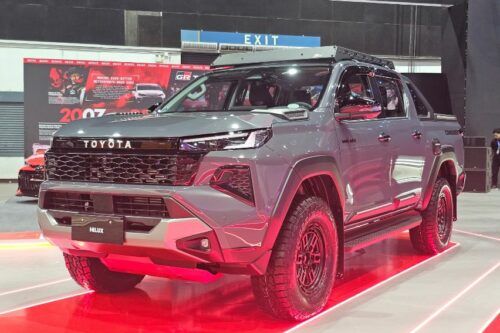
3 reasons to like the next-gen Toyota HiluxCesar Miguel, Jun 29, 2026
-
First impressions: Geely EX2Cesar Miguel, Jun 18, 2026
-
How to prepare your car for summerCesar Miguel, Mar 11, 2026
-
Tips on how to prevent vehicle firesCesar Miguel, Mar 17, 2026
You might also be interested in
- News
- Featured Stories
-
-
-
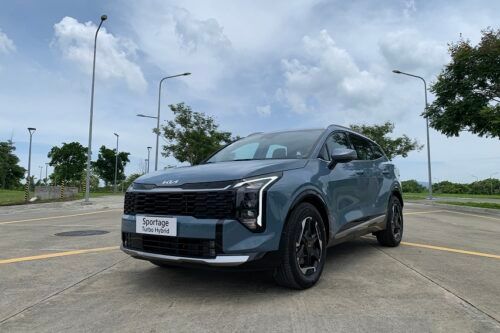
Kia PH brings back Sportage nameplatePaulo Papa, Jul 24, 2026
-
-
-
Aston Martin unveils mil-spec SUV for CoDPaulo Papa, Jul 20, 2026


-
-
Wheel-to-wheel: Denza B5 vs GWM Haval H7Paulo Papa, Jul 29, 2026
-
-
Geely EX5 EM-i vs other PHEV crossoversPaulo Papa, Jul 23, 2026
-
-
GWM Featured Cars
- Latest
- Upcoming
- Popular
-
 GWM Haval H7₱1.298 - 1.698 Million SRP Price ManilaMonthly Payments : ₱22,267 x 60Write a Review Get Exclusive Promos
 -
GWM Haval H9₱1.999 Million SRP Price ManilaMonthly Payments : ₱34,291 x 604.67 (9 Reviews) Get Exclusive Promos
-
GWM Cannon₱1.348 - 1.888 Million SRP Price ManilaMonthly Payments : ₱23,125 x 604 (9 Reviews) Get Exclusive Promos
-
GWM Cannon Pilot₱1.248 - 1.338 Million SRP Price ManilaMonthly Payments : ₱21,410 x 60Write a Review Get Exclusive Promos

-
GWM Haval H9₱1.999 Million SRP Price ManilaMonthly Payments : ₱34,291 x 604.67 (9 Reviews) Get Exclusive Promos
-
GWM Cannon₱1.348 - 1.888 Million SRP Price ManilaMonthly Payments : ₱23,125 x 604 (9 Reviews) Get Exclusive Promos
-
GWM Haval H7₱1.298 - 1.698 Million SRP Price ManilaMonthly Payments : ₱22,267 x 60Write a Review Get Exclusive Promos
-
GWM Cannon Pilot₱1.248 - 1.338 Million SRP Price ManilaMonthly Payments : ₱21,410 x 60Write a Review Get Exclusive Promos
Latest GWM Car Videos on Zigwheels

-
2026 GWM Haval H9 First Look | Zigwheels.Ph06 Mar, 2026 .
-
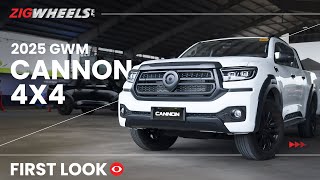
2025 GWM Cannon 4x4 First Look | Zigwheels.Ph23 Jul, 2025 .
-
Hybrid Meets Heavy Metal | GWM at Auto Shanghai 2025 | Zigwheels PH26 May, 2025 .
-
2025 GWM Tank 300 Spec Guide | Zigwheels.Ph06 May, 2025 .
-
2025 GWM Tank 300 Review | Zigwheels.Ph06 May, 2025 .
-
GWM at Auto Guangzhou 2023 | Zigwheels.Ph09 Feb, 2024 .
-
Go with More: The Haval Jolion | Zigwheels.Ph08 Jan, 2024 .





GWM Car Articles From Carmudi
- journal
-
Haval H7 further expands GWM PH SUV lineupPaulo Papa, Jun 16, 2026
-
GWM PH names Del Pilar as new sales director, Mar 25, 2026
-
GWM PH brings out Haval H9Ruben Manahan IV, Feb 04, 2026
-
GWM PH launches Tank 300Ruben Manahan IV, Jan 24, 2024
-
GWM Ora, Tank, Cannon showcased at Guangzhou Auto ShowPaulo Papa, Nov 21, 2023