BMW Group sets green benchmarks for 2030 goal
MANILA: The BMW Group is in the process of allowing resource efficiency and sustainability to be the primary focus of the strategic path of the company.
Chairman of the Board of Management of BMW Group Oliver Zipse confirmed on June 27 that the auto company is continuously establishing clear goals for the reduction of CO2 emissions up to 2030.
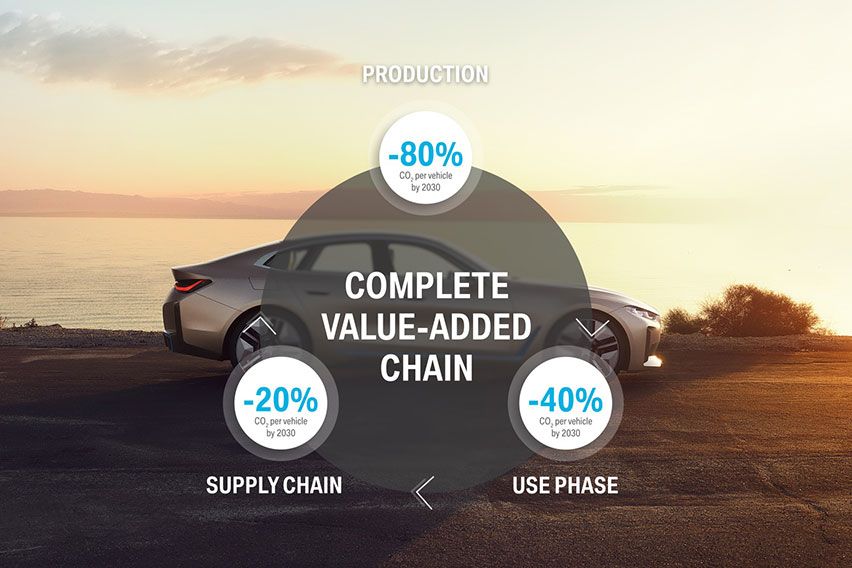
The idea of constant improvement will be kept at the core of the system to decrease CO2 emissions and level up resource efficiency. For the first time, an extension was placed throughout the whole life cycle, from the supply chain to the manufacturing phase to the culmination of the use phase.
The main goal is to considerably lower CO2 emissions per vehicle by at least one third across the whole spectrum. For a range of 2.5 million BMW Group vehicles, which were manufactured in 2019, this would represent a decrease of over 40 million tons of CO2 throughout the lifecycle in 2030.
Beginning in 2021, the BMW Group will publish its general business trends and financial results in an updated paper, which will contain the latest information on its sustainability objectives. The BMW Group will also base its objectives on the measures of the well-acclaimed Science-Based Targets Initiative.
The BMW Group can significantly impact the CO2 emissions of its own facilities and sites where it sets a precedent for effective resource management. The auto company is focusing on the largest cuts industry-wide in this field by 2030, and this follows a more ruthless path compared to the 1.5-degree goal.
As it has already reduced emissions per vehicle generated by over 70% since 2006, the BMW Group currently targets to minimize its emissions (Scope 1 + 2 – Link) by 80% from 2019 levels by 2030. As for CO2 emissions, it will be lower than 10% of what they were compared to that in 2006.
To add to the substantial decrease, the BMW Group will also completely offset the remaining CO2 emissions (Scope 1 + 2) from 2021 onwards with reputable certificates.
Aside from sourcing 100% green power this 2020, the BMW Group will strategically invest in energy efficiency optimization and it will also utilize digitalization-enabled prospects.
The projection in 10 years is that there will be a total of over seven million electrified BMW Group vehicles on the roads, wherein two-thirds of them will have a purely-electric drive train.
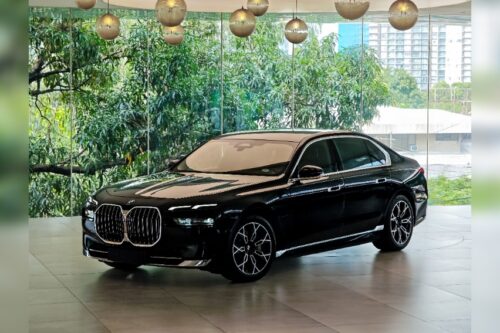
The BMW Group is also the top provider of electrified vehicles. By the end of next year, the BMW Group will roll out five purely electric production vehicles, namely, the BMW i4, BMW iNEXT, BMW iX3, Mini Cooper SE, and the BMW i3. Another breakthrough will be the forthcoming generation of the BMW 7 Series.
The BMW brand flagship can be availed with four various drive technologies. These include an electrified plug-in hybrid, high-performance petrol or diesel engine with 48-volt technology, and a purely electric BEV model for the first time.
The auto company will have 25 electrified models by 2023, with half of them purely electric.
Aside from the BMW 7 Series, the extensive electrification will be introduced for the entire model lineup.
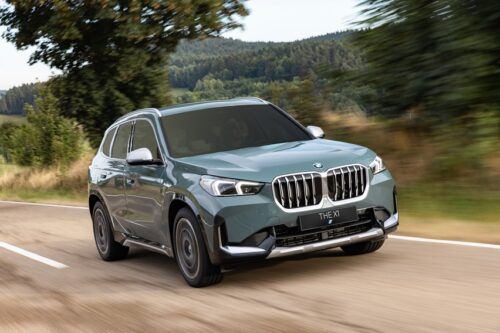
Additional examples of the “Power of Choice” will be the BMW 5 Series and the high-volume BMW X1, which will be available in the future with four drive train variants. These variants include petrol and diesel with 48-volt technology, plug-in hybrid, and purely electric. The current introduction of 48-volt technology is another aspect of CO2 reduction.
The BMW Group has already inked an agreement with its cell producers that they will only utilize green power to generate fifth-generation battery cells.
Through this, the BMW Group also targets to guarantee that its collaborators combat climate change with the same effect and determination as it does alone.
Aside from reducing CO2 emissions, the auto company has plans of enhancing the share of secondary material in new vehicles since electromobility cannot depend entirely on primary materials in the long run.
According to Zipse, the main goal of the BMW Group is to promote closure of material cycles for the protection of the finite resources of nature and its efficient utilization.
The BMW Group also aims to make and share high-quality secondary material in its vehicles by 2030 and allow it to monitor the actual utilization of raw materials. Secondary material lowers CO2 emissions considerably as compared to primary materials.
The auto company also takes back all the used BMW high-voltage batteries globally, even without the legal requirements.
Moreover, it is also pioneering virtual tools and blockchain technology to monitor and validate the international flow of goods. The PartChain initiative, for example, allows consistently certifiable and tamper-proof collection of information in the supply chain.
Image from BMW
Also read: BMW Group maps out future after pandemic

Sell your car at the best price
 Verified and genuine buyers
 Free listing
BMW Car Models
-

BMW Z4 -
BMW X5 -
BMW X3 -
BMW M2 Coupe -
BMW iX -
BMW X1 -
BMW 3 Series Sedan -
BMW 2 Series Coupe -
BMW M4 Coupe Competition -
BMW 4 Series Coupe
MIAS 2026


Trending & Fresh Updates
- Latest
- Popular
-

-
-
-
-
-
-
-
BYD DM-i lineup conquers Southern LuzonCesar Miguel, Mar 10, 2026
-
-
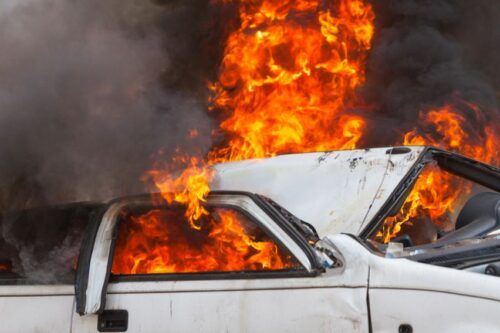
Tips on how to prevent vehicle firesCesar Miguel, Mar 17, 2026
-
How to prepare your car for summerCesar Miguel, Mar 11, 2026
-


-
-
-
Porsche Q1 2026 sales slide by 15%Ruben Manahan IV, May 14, 2026
-
-
-
-
BYD DM-i lineup conquers Southern LuzonCesar Miguel, Mar 10, 2026
-
-
-
How well do you understand traffic signs?Cesar Miguel, Sep 09, 2025
-
-
Here are ways to avoid road ragePaulo Papa, Sep 23, 2025




You might also be interested in
- News
- Featured Stories
-
-
-
-
Eneos to take over Caltex PH in 2027Paulo Papa, May 19, 2026
-
-

-
-
EV Love: PHEVs from Bentley, BMW, BYDPaulo Papa, Feb 18, 2026
-
Vehicles named after indigenous tribesCesar Miguel, Aug 07, 2025
-
Pedal peddlers: Auto brands that sold bikesPaulo Papa, Jun 03, 2025
-
-
BMW Featured Cars
- Latest
- Popular
-
 BMW X1₱3.998 Million SRP Price ManilaMonthly Payments : ₱68,587 x 604.44 (16 Reviews) Get Exclusive Promos
 -
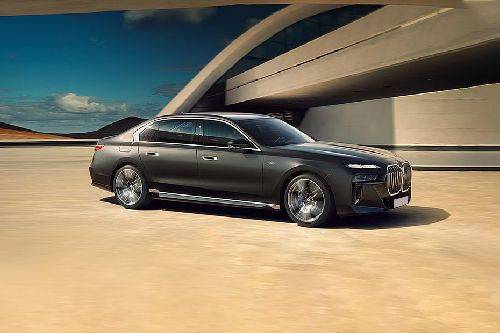
BMW 7 Series Sedan₱7.99 - 8.99 Million SRP Price ManilaMonthly Payments : ₱137,072 x 604.69 (16 Reviews) Get Exclusive Promos
-
BMW M5 Sedan₱12.79 Million SRP Price ManilaMonthly Payments : ₱219,419 x 605 (1 Reviews) Get Exclusive Promos
-
BMW M5 Touring₱12.79 Million SRP Price ManilaMonthly Payments : ₱219,419 x 605 (1 Reviews) Get Exclusive Promos


-
BMW Z4₱4.99 - 5.89 Million SRP Price ManilaMonthly Payments : ₱85,606 x 604.69 (16 Reviews) Get Exclusive Promos
-
BMW X5₱5.99 - 8.89 Million SRP Price ManilaMonthly Payments : ₱102,761 x 604.5 (18 Reviews) Get Exclusive Promos
-
BMW X3₱4.19 - 4.99 Million SRP Price ManilaMonthly Payments : ₱71,881 x 604.2 (15 Reviews) Get Exclusive Promos
-
BMW M2 Coupe₱5.99 - 8.89 Million SRP Price ManilaMonthly Payments : ₱102,761 x 604.46 (13 Reviews) Get Exclusive Promos
-
BMW iX₱6.29 Million SRP Price ManilaMonthly Payments : ₱107,908 x 604.83 (12 Reviews) Get Exclusive Promos
-
BMW X1₱3.998 Million SRP Price ManilaMonthly Payments : ₱68,587 x 604.44 (16 Reviews) Get Exclusive Promos
Latest BMW Car Videos on Zigwheels

-
BMW i8 First Impression @ PIMS 2016 | carbay.ph22 Sep, 2016 . 205 views
BMW Car Articles From Carmudi
- journal
-
BMW PH unleashes updated X1 modelRuben Manahan IV, Apr 01, 2026
-
New BMW 750e xDrive PHEV now in PHPaulo Papa, Nov 14, 2025
-
Jacob Ang steps up as BMW PH presidentRuben Manahan IV, Sep 02, 2025
-
All-new BMW M5, M5 Touring now in PHPaulo Papa, Jul 25, 2025
-
BMW PH introduces X3 30e xDrive M SportRuben Manahan IV, Apr 14, 2025