
Vehicles named after indigenous tribes
When there’s definitely more to its name than you think
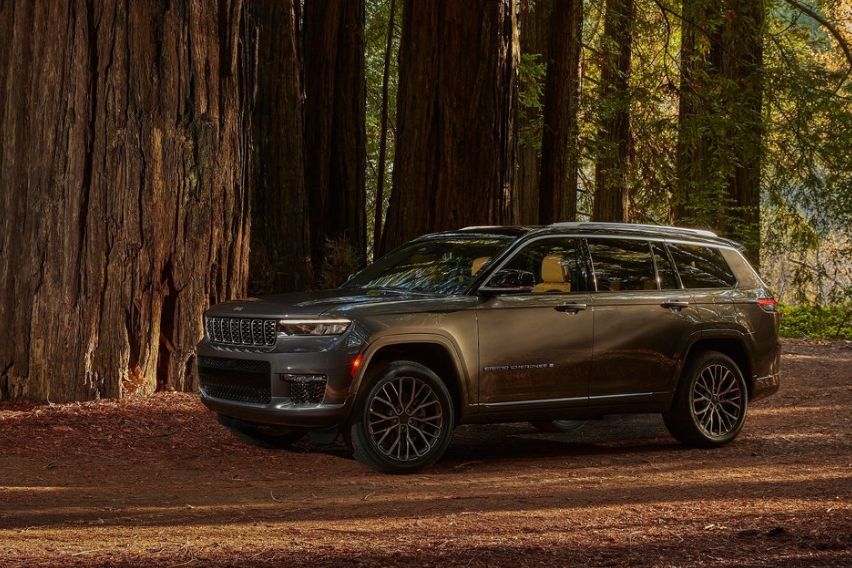
Naming something that you’ve poured all your talent, blood, sweat, and maybe even tears into can be difficult, and it's especially true for those working in the car industry. And sometimes, the names are just a plain miss. The aforementioned is apparent with all the weird and often funny names that have come out in the past.
Sometimes, brands will take the easy way out and name their products with an arrangement of letters and numbers. Examples, of course, include BMW and Lexus. Some, however, have taken inspiration from the wide variety of cultures around the world.
For some of the said brands, it is a salute to the adaptability of indigenous peoples. Some also chose an appropriate name of a tribe to represent what the vehicle is capable of.
So, in celebration of the upcoming United Nations’ International Day of the World’s Indigenous Peoples (August 9, 2025), let's check out some vehicles that borrowed the names of tribes and cultures from various parts of the globe.
Jeep Cherokee, Grand Cherokee
One of the more famous vehicles, which are both still sold in various markets in the present day by the way, are the Jeep Cherokee and the Grand Cherokee.
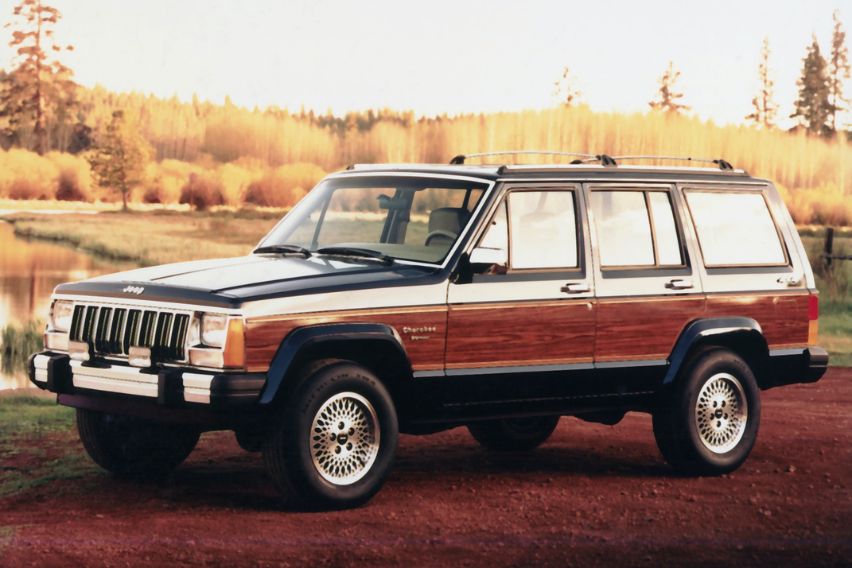 Photo from Jeep
Per the American brand’s own admission, it has been using the Cherokee name to honor the similarly named American Indian tribe to evoke a sense of adventure. The early models of the Cherokee, after all, were highly capable off-road sport utility vehicles (SUV) that initially branched off as a variant of the Jeep Grand Wagoneer.
Of particular note is the second-generation XJ version, which is still utilized as a basis for off-road builds, at least in North America.
For the modern versions, the Cherokee is a compact SUV, while the Grand Cherokee is a larger model with three-row versions. Only the latter is available in the Philippine market as the Grand Cherokee L, with a price of P5.49 million.
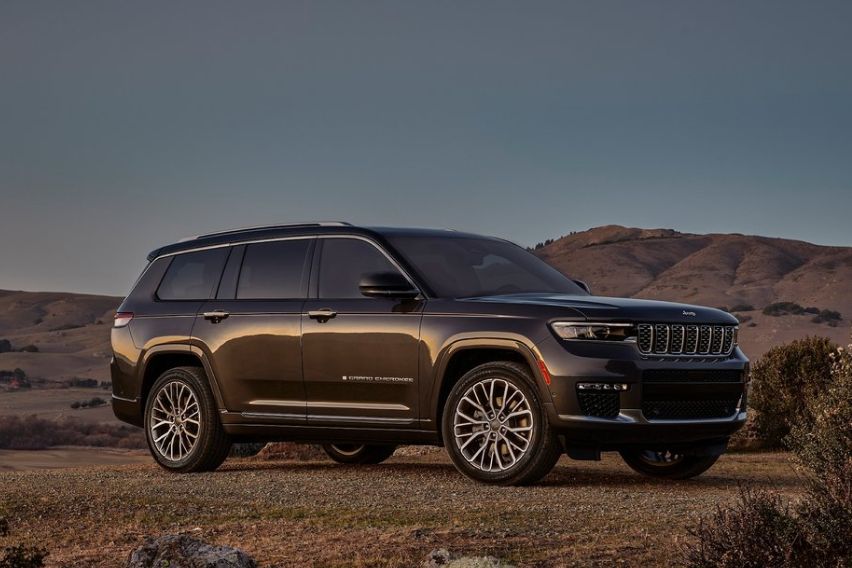 Photo from Jeep
Here’s a table showcasing the basic mechanical specifications of the Philippine-spec, seven-seater Jeep Grand Cherokee L:
|
Engine |
3.6-liter V6 gasoline |
|
Drivetrain |
4x4 |
|
Transmission |
Eight-speed automatic |
|
Horsepower |
282 |
|
Torque |
344 Newton-meters |
|
Front suspension |
Double wishbone |
|
Rear suspension |
Multi-link |
|
Brakes |
Front and rear discs |
Dodge Dakota
The Dodge Dakota is named after the Dakota Territory - an organized and incorporated area in the United States comprising regions of modern-day North Dakota and South Dakota. The name of the area, meanwhile, is taken from the Dakota branch of the Sioux peoples.
Similar to the Jeep Cherokee, Dodge wanted to provide the vehicles under the Dakota nameplate a sense of rugged capability. The aforementioned, of course, is quite appropriate, as the moniker was utilized for the American carmaker’s once prolific line of midsize pickup trucks that competed against the first to third generation Ford Ranger and the Chevrolet S-10.
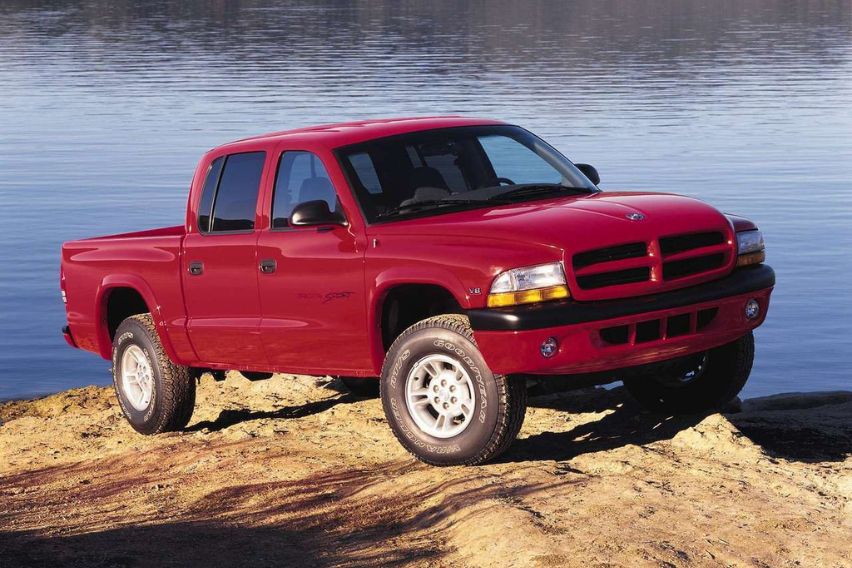 Photo from Dodge USA
When US brands shifted their focus to larger pickup trucks, however, Dodge dropped the Dakota back in 2011. Interestingly, it was also around the same time when Ford discontinued selling the Ranger for North American markets.
For truck enthusiasts out there, do note that Dodge was available as an R/T trim - the same name given to various powerful versions of the Dodge Charger and Challenger. In its most powerful form, it used a 4.7-liter V8 engine capable of dishing out 302 horsepower (hp) and 446 Newton-meters (Nm) of torque.
Mazda Navajo
From 1991-1994, Mazda sold a rebadged version of the first-generation Ford Explorer. It was called the Mazda Navajo after the Navajo indigenous peoples from the Southwestern US. Per the Japanese marque, the name was picked to provide an American feel and identity to its model.
For various reasons, the Mazda Navajo was very short-lived, and after 1994, it was replaced by the Tribute, which was based on the Ford Escape.
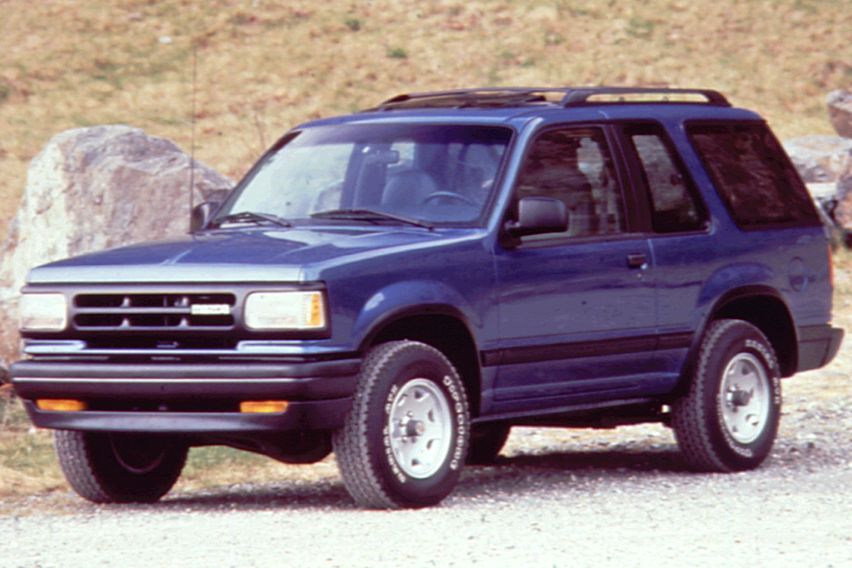 Photo from Mazda UK
Nowadays, however, it is a consensus amongst many US-based car enthusiasts on social media sites that the Mazda Navajo is desirable for its rarity. Performance-wise, however, the model was merely a standard SUV of the time.
At most, its 4.0-liter V6 can produce up to 160 hp. It also had a basic four-speed automatic gearbox, although it was offered with a 4x4 drivetrain.
In comparison, the present-day Ford Explorer is miles ahead in terms of refinement and performance.
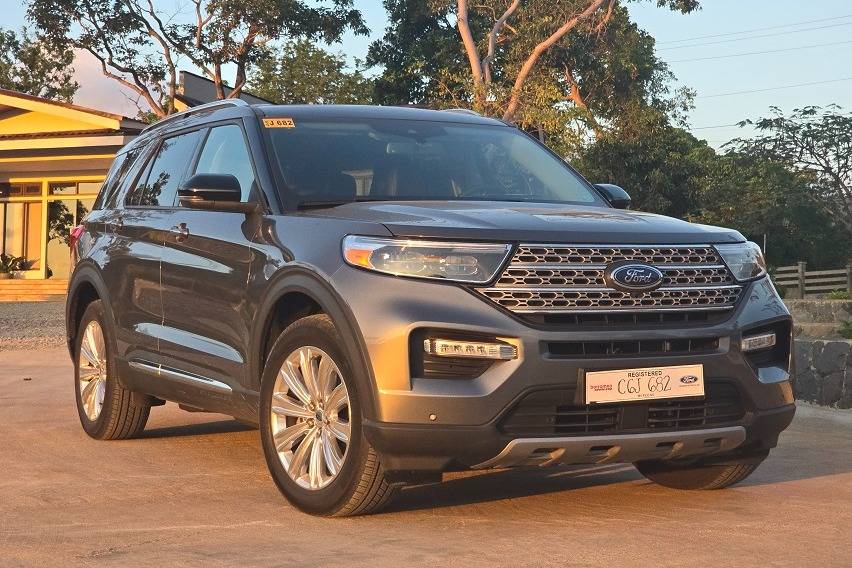 Photo by Ruben Manahan IV
In the Philippine market, the Explorer is one of the largest nameplates in the Blue Oval’s lineup. It retails at P3.498 million, and it offers loads of high-tech amenities, such as:
- Ford Co-Pilot360 Advanced driver-assist systems (ADAS)
- Intelligent 4x4 with Terrain Management
- LED exterior lighting
- Triple-zone automatic climate controls
- Eight-inch infotainment with Sync 3
- Apple CarPlay and Android Auto
- Wireless smartphone charging
- Bang and Olufsen sound system
The modern Ford Explorer is likewise more powerful. Specifically, it uses a 2.3-liter EcoBoost mill that can put out 300 hp and 420 Nm of torque.
Volkswagen Touareg
For similar reasons with the American brands on this list, Volkswagen named its midsize crossover after the Tuareg people of the Saharan desert and North Africa, albeit with a different spelling.
The aforementioned ethnic group, after all, are hardy nomadic pastoralists and can thrive despite the harsh climes of their region. Also, being nomadic, the Tuareg are also highly mobile - something Volkswagen wants to evoke in its model, which was initially introduced back in 2002.
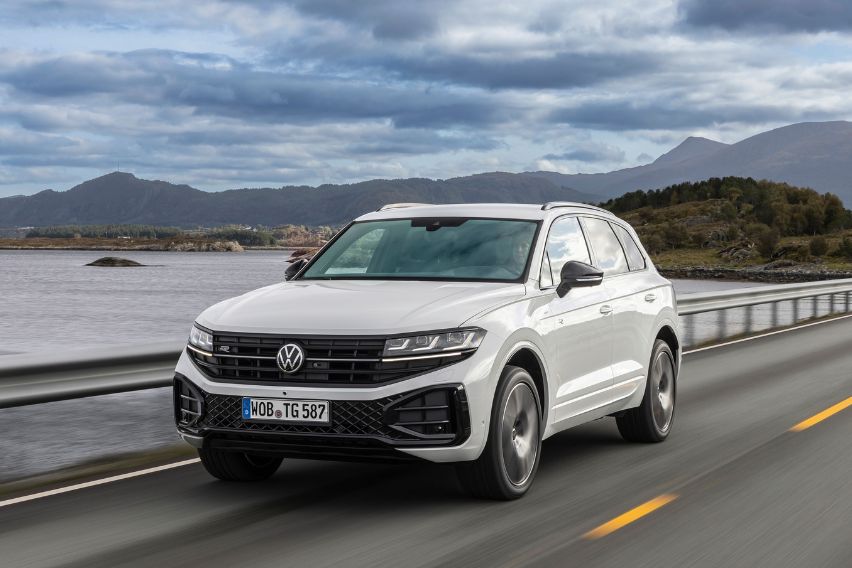 Photo from Volkswagen
During its era, the Volkswagen Touareg was definitely a tough “go everywhere” vehicle, thanks to its locking center differential, 4x4 drivetrain, and its wide selection of powertrains.
Notably, one of the most powerful is a 6.0-liter W12 engine, which was initially intended to be a limited production version for Qatar. At maximum, the 12-cylinder Touareg can generate up to 444 hp and 600 Nm of torque. Other powertrains made available to the Volkswagen vehicle include a 4.2 V8 for the first generation, a gasoline and diesel 3.0-liter V6 for the second and third generations, and a 3.0-liter V6 hybrid.
To note, the Volkswagen Touareg was made available in the Philippine market some years ago. The brand, however, continued to update the nameplate and made it available in other markets such as China, Europe, and Australia.
Nissan Qashqai
Yet another model named after highly mobile pastoralists is the Nissan Qashqai. Specifically, it borrowed its name from the Qashqai - a Turkic indigenous group residing in Iran.
Per Nissan itself, the Qashqai crossover received its epithet because it was designed to fit the lifestyle of an “urban nomad.” In other words, someone who was in need of a highly versatile ride of a suitable size for in-city streets.
In the UK, for example, the Qashqai has a whopping five trims with varying levels of amenities and features.
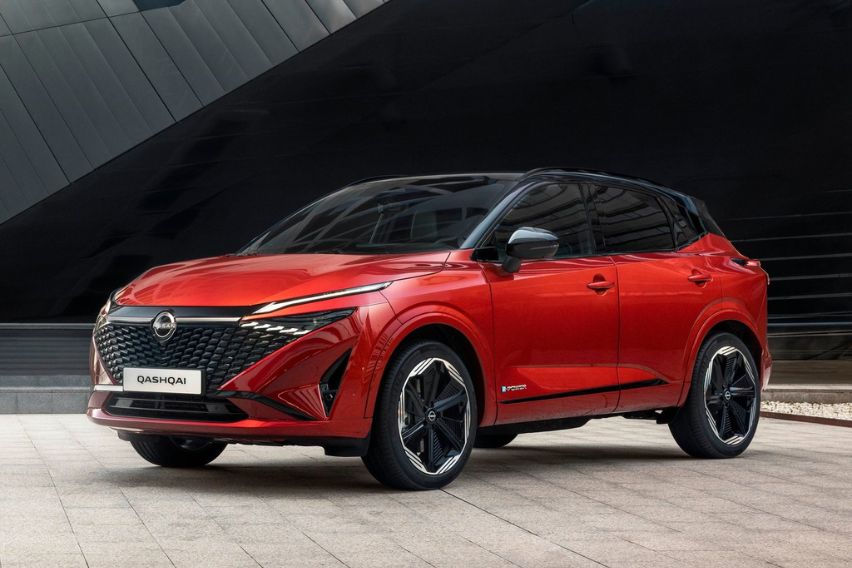 Photo from Nissan UK
With regard to its mechanical bits, it is available in both e-POWER and mild hybrid versions. It can also be bought with a manual or automatic transmission, and front-wheel-drive (FWD) or all-wheel-drive (AWD) configurations.
For better safety and navigation, the model comes with advanced intelligent driving assistance systems, built-in Google integration, and a comprehensive vehicle information monitoring system.
All of the aforementioned sounds cool, but Nissan Motor Philippines has not provided any hints that it will be bringing in the Qashqai anytime soon. The company’s local arm, however, is more likely to add the Magnite and X-Trail e-POWER to its local roster. The two aforementioned cars, after all, were displayed at the 9th Philippine International Motor Show.
Indian Motorcycles
While the others already listed above pertain to individual car models, Indian Motorcycles has gone all in by incorporating the imagery and, to a certain extent, the collective cultural identity of American indigenous tribes into its products.
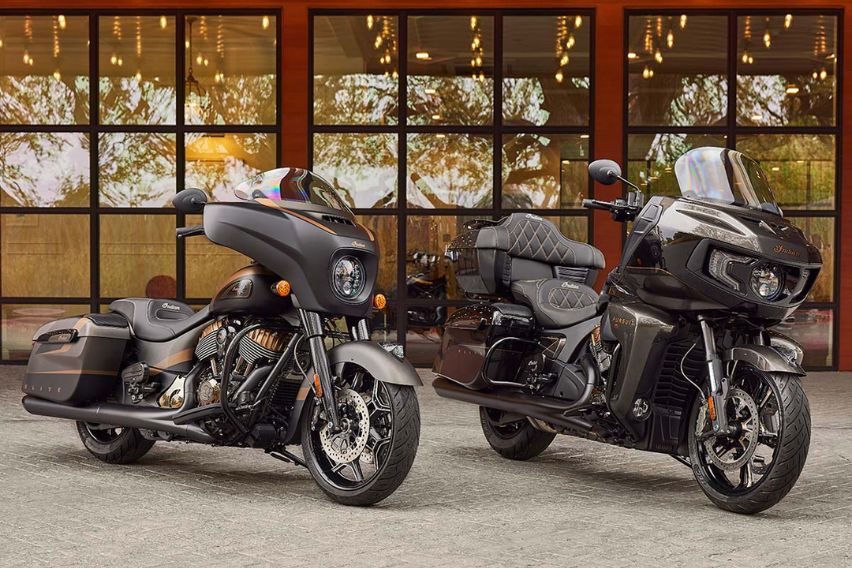 Photo from Indian Motorcycles Philippines
Examples of the aforementioned include, but are not limited to, the following models:
- Indian Chief Dark Horse
- Indian Chief Bobber Dark Horse
- Indian Sport Chief
- Indian Chieftain Limited
- Indian Chieftain Dark Horse
In the context of the brand, “chieftain” or “chief” could refer to a tribe’s leader. At the same time, the name is a nod to the first-ever Indian Chief model introduced back in 1922.
The logo of the company itself is a stylized side profile of a Native American wearing the “war bonnet,” otherwise known as the iconic flared feather headdress.
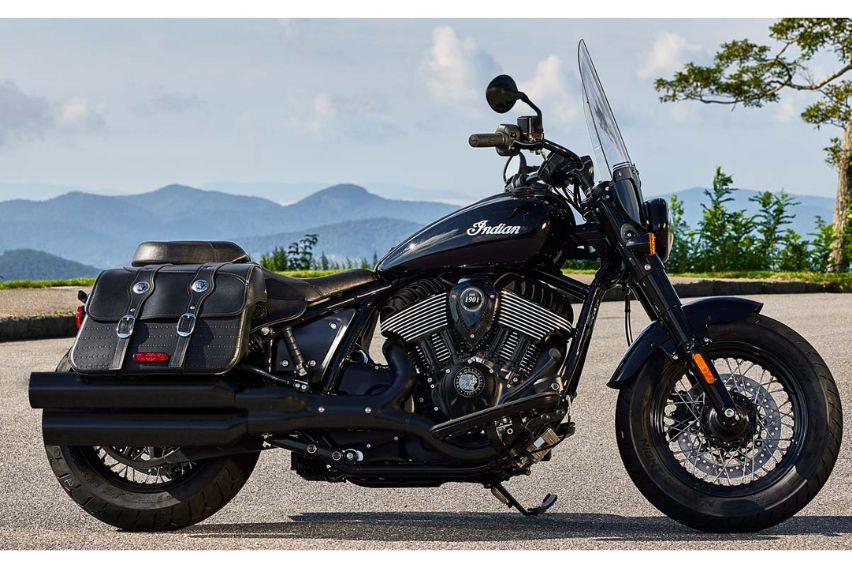 Photo from Indian Motorcycles Philippines
Interestingly, anthropologist James Howard, in his book “Plains Anthropologist,” shared that not all American indigenous peoples actually wore the war bonnet. In fact, it is limited to Native American tribes of the Great Plains and Canadian Prairies, such as the Cheyenne, Comanche, Crow, Lakota, Kiowa, and Plains Apache - among others.
Final thoughts
While “borrowing” the name of an indigenous tribe can be very useful in establishing brand identity and product recognition, it has been met with controversy over the years.
As pointed out by some American tribal representatives back in 2021, after all, they had already expressed their concerns linked to cultural appropriation. Another group in 1990 likewise criticized the usage of their name without compensation.
There is, however, another side to the aforementioned. Indian Motorcycles, for example, has established the Indian Motorcycle Advisory Council to enable direct consultation with tribal leaders. It has also continued to support many indigenous youth groups, as well as a number of indigenous craftsmen and artists.
More recently, Indian Motorcycle held the Thunderbird Throttle Ride - an activity designed to build awareness regarding critical issues affecting the indigenous tribes of Arizona.
What do you think about cars being named after indigenous tribes or cultures? Let us know!
Also read:
To conserve and protect: car brands in PH and their conservation projects
Cars, brands with unique wellness features
Connect with us through our various social media pages:
Facebook: https://www.
Instagram: https://www.

Sell your car at the best price
 Verified and genuine buyers
 Free listing
PIMS 2026


Trending & Fresh Updates
- Latest
- Popular
-

-
-
-
3 reasons to buy the all-new Lexus ESCesar Miguel, Oct 09, 2026
-
5 exciting things about the Kia EV3Paulo Papa, Oct 09, 2026
-
iCAUR V27: 1st lookPaulo Papa, Oct 02, 2026
-
-
First drive: Kia Sportage Turbo HybridCesar Miguel, Aug 18, 2026
-
First impressions: Geely EX2Cesar Miguel, Jun 18, 2026
-
Weighing down on car parkingPaulo Papa, Sep 24, 2026
-
Tips on how to prevent vehicle firesCesar Miguel, Mar 17, 2026
-
How to prepare your car for summerCesar Miguel, Mar 11, 2026





-
-
-
-
Here’s why this family only buys ToyotasCesar Miguel, Sep 17, 2026
-
-
3 reasons to be excited about the iCAUR V27Cesar Miguel, Sep 25, 2026
-
First drive: Kia Sportage Turbo HybridCesar Miguel, Aug 18, 2026
-
-
How to prepare your car for summerCesar Miguel, Mar 11, 2026
-
Tips on how to prevent vehicle firesCesar Miguel, Mar 17, 2026
-
Weighing down on car parkingPaulo Papa, Sep 24, 2026



You might also be interested in
- News
- Featured Stories
-
Nissan unveils all-new PIXOPaulo Papa, Sep 29, 2026
-
-
-
Nissan poised for Terrano launch already?Paulo Papa, Sep 09, 2026
-
-


-
3 reasons to buy the all-new Lexus ESCesar Miguel, Oct 09, 2026
-
5 exciting things about the Kia EV3Paulo Papa, Oct 09, 2026
-
iCAUR V27: 1st lookPaulo Papa, Oct 02, 2026
-
iCAUR V23: 1st impressionsPaulo Papa, Oct 01, 2026
-
3 reasons to be excited about the iCAUR V27Cesar Miguel, Sep 25, 2026
-
3 reasons to consider the GAC E8 HEVCesar Miguel, Sep 21, 2026
Featured Cars
- Latest
- Upcoming
- Popular
-
 Xpeng X9₱3.858 - 4.058 Million SRP Price ManilaMonthly Payments : ₱66,185 x 60Write a Review Get Exclusive Promos
 -
Xpeng L03₱1.548 - 2.058 Million SRP Price ManilaMonthly Payments : ₱26,556 x 60Write a Review Get Exclusive Promos
-
Kia EV3₱1.898 Million SRP Price ManilaMonthly Payments : ₱32,561 x 60Write a Review Get Exclusive Promos
-
Jetour T2 Lightning i-DM₱2.488 - 2.688 Million SRP Price ManilaMonthly Payments : ₱42,682 x 604 (2 Reviews) Get Exclusive Promos
-
GAC Aion UT₱1.068 Million SRP Price ManilaMonthly Payments : ₱18,322 x 60Write a Review Get Exclusive Promos
-
MINI 5 Door₱3.799 Million SRP Price ManilaMonthly Payments : ₱65,173 x 604.56 (18 Reviews) Get Exclusive Promos
-
MINI 3 Door₱3.28 - 4.499 Million SRP Price ManilaMonthly Payments : ₱56,270 x 604.53 (19 Reviews) Get Exclusive Promos
-
-
Toyota Vios₱738,000 - 908,000 SRP Price ManilaMonthly Payments : ₱12,660 x 604.28 (107 Reviews) Get Exclusive Promos
-
Kia Sonet₱778,000 - 1.218 Million SRP Price ManilaMonthly Payments : ₱13,346 x 604.36 (14 Reviews) Get Exclusive Promos
Latest Car Videos on Zigwheels

-
2026 Denza B8 Walkaround | Zigwheels.Ph30 Sep, 2026 .
-
2026 Kia Sportage SX Review | Zigwheels.Ph30 Sep, 2026 .
-
2026 Isuzu D-Max First Look | Zigwheels.Ph14 Sep, 2026 .
-
2026 Denza D9 Review | Zigwheels.Ph14 Sep, 2026 .
-
GWM Cannon SLUX 4x4 Walkaround | Zigwheels.Ph02 Sep, 2026 .
-
2026 Radar RD6 ECON EV Pickup Review | Zigwheels.Ph02 Sep, 2026 .
-
2026 BYD eMAX 7 Review | Zigwheels.Ph25 Aug, 2026 .
-
Electric or Diesel? BAIC B60e Beaumont rEV vs. B40 Pro Trailmaster Comparo | Zigwheels.Ph25 Aug, 2026 .
-
Our Best Small EV (So Far!) | Z-List Monthly Wrap | July 202614 Aug, 2026 .
-
2026 Mazda BT-50 Pangolin Review | Zigwheels.Ph14 Aug, 2026 .



Car Articles From Carmudi
- journal
- advice
- financing
- insurance
-
PH auto industry YTD sales exceed 300K vehicles in Aug. 2026Ruben Manahan IV, Sep 29, 2026
-
Xpeng officially enters PH market; unveils X9, L03Ruben Manahan IV, Sep 25, 2026
-
Kia PH widens BEV stable with all-new EV3Ruben Manahan IV, Sep 21, 2026
-
PH-spec Ford Everest, Ranger get major revampRuben Manahan IV, Sep 04, 2026
-
Nissan Navara PHEV, Primera EV PH launch set on NovemberRuben Manahan IV, Sep 03, 2026

-
Register & get OR/CR for your imported car the right wayCarmudi PH, Apr 16, 2025
-
How to handle a checkpoint: The right and wrong movesCarmudi PH, Apr 14, 2025
-
Don’t risk it: Here’s how to confirm driver’s license validityCarmudi PH, Apr 08, 2025
-
Your complete guide to a Non-Professional Driver’s LicenseCarmudi PH, Apr 04, 2025
-
Fixing errors or updating info? How to revise your driver’s licenseCarmudi PH, Apr 02, 2025





-
Toyota Hilux Sangla OR/CR: A Complete Preparation GuideCarmudi PH, Oct 07, 2026
-
How Much Can You Borrow Against a Fully Paid Car?Carmudi PH, Oct 06, 2026
-
How to Compare Car Refinancing Offers in the PhilippinesCarmudi PH, Sep 29, 2026
-
Pwede ba mag-apply ng Sangla OR/CR kung di pa tapos bayaran ang car loan?Carmudi PH, Sep 24, 2026
-
Sangla OR/CR Car Requirements in the Philippines: Complete ChecklistCarmudi PH, Sep 21, 2026





-
How hidden facts and fake claims can ruin your insurance protectionCarmudi PH, Jun 10, 2026
-
Is your car ready for the next big downpour? The insurance traps most drivers missCarmudi PH, Jun 08, 2026
-
What to do if your car insurance claim is denied for premium non-paymentCarmudi PH, Jun 05, 2026
-
Buy these car accessories once & reap the benefits every renewalCarmudi PH, Jun 03, 2026
-
Top reasons Filipino drivers file Acts of Nature claimsCarmudi PH, Jun 01, 2026