
PH now under ‘state of national energy emergency’, PBBM declares
Country’s chief exec receives emergency powers to suspend excise tax

MANILA: President Ferdinand Marcos Jr. has declared the Philippines under “state of national energy emergency.”
KEY TAKEAWAYS
What does EO 110 entail?
The EO 110 authorizes the President to implement the fuel and energy allocation plan and other energy conservation measures.What is Republic Act 12316?
Republic Act 12316 grants the President the authority to lift or suspend fuel excise taxes if the Dubai crude oil price has been at or above US$80 per barrel for one month.The country’s chief executive signed Executive Order 110 citing that the ongoing conflict in the Middle East poses a threat to the country’s energy security.
The same order noted that the closure of the Strait of Hormuz disrupted the supply of fuel products to international markets, affecting the country as a net importer and is vulnerable to disruptions in global oil production and transportation.
The Malacañang said that EO 110 is pursuant to Section 25 of Republic Act 7638 (also known as the Department of Energy Act of 1992), which authorizes the President to declare a critically low energy supply or imminent danger thereof, and authorize the implementation of the fuel and energy allocation plan and other energy conservation measures.
Other stories: |
Further, EO 110 adopts the Unified Package for Livelihoods, Industry, Food, and Transport (UPLIFT) as the government’s coordinated, whole-of-government response framework to safeguard national interest.
A committee made up of the Executive Secretary and the Secretaries of the Department of Energy, Department of Transportation, Department of Social Welfare and Development, Department of Agriculture, Department of Finance, Department of Economy Planning and Development, as well as Department of Budget and Management — chaired by the President of the Philippines — will oversee the said program.
Under EO 110, the energy department is authorized to take appropriate measures to safeguard the stability and adequacy of the country’s energy supply, which will include implementation of fuel and energy optimization plans; adoption and enforcement of energy conservation measures; action against hoarding, profiteering, and supply manipulation; and direction of the Philippine National Oil Company (PNOC) and PNOC Exploration Corporation to assist in ensuring the stability and adequacy of the domestic fuel and energy supply.
These three agencies will be in charge of the procurement of required fuel and petroleum products and make advance payment of an amount exceeding 15 percent of the contract amount.
Concerned departments, agencies, offices, and instrumentalities are also directed to implement necessary response measures.
The transportation department will provide measures to soften the blow on the transport sector and the commuting public by way of fuel subsidy allocations, commuter fare subsidies, expansion, and review of appropriate measures to reduce transport costs such as the temporary reduction, suspension, or deferral of toll charges, among others.
Meanwhile, the government’s social welfare arm shall speed up the release of assistance and provide appropriate social welfare and livelihood support to affected sectors, such as transport workers, farmers, fisherfolk, displaced workers, repatriated Overseas Filipino Workers, and other vulnerable groups.
Moreover, local government units are also urged to create measures within their respective jurisdictions that support, facilitate, and complement the national policies and agency directives, and to allocate necessary resources, including funding and personnel, to mitigate the impact of the disruptions in the global fuel supply.
The declaration of a national energy emergency shall remain in effect for one year from issuance, unless extended or lifted by the President himself.
Relatedly, Marcos Jr. signed Republic Act 12316 that will give him the authority to reduce or suspend fuel excise taxes if Dubai crude oil price reaches or exceeds US$80 per barrel for one month.
“The power of the President to temporarily suspend or reduce the excise tax on petroleum products granted under this Section shall be exercised only until December 31, 2028,” the law stated.
With this, the executive branch needs to report to Congress the basis and goals for reducing or lifting excise taxes, including expected revenue losses, effects on households, impact on inflation and fuel prices, cost-benefit analysis, and any possible market distortions or unintended consequences.
“The report shall include a recommendation on whether the suspension or reduction of excise taxes should be maintained, modified, or lifted, and shall form part of the basis for any continued suspension or reduction,” the law noted.
For their part, companies will be required to submit to the energy department their monthly data on the cost components of the price of petroleum products sold.
Also read:
HOR to fast-track mandatory biofuel blending requirement suspension
Diaz's manager says conditions of ‘free fuel for life’ reward raised only after 2 years
Oil firms to conduct 'big-time' hikes this week
Connect with us through our various social media pages:
Facebook: https://www.facebook.com/ZigWheelsPhilippines
Instagram: https://www.instagram.com/zigwheelsph/

Sell your car at the best price
 Verified and genuine buyers
 Free listing
PIMS 2026


Trending & Fresh Updates
- Latest
- Popular
-

-
Nissan unveils all-new PIXOPaulo Papa, Sep 29, 2026
-
-
3 reasons to be excited about the iCAUR V27Cesar Miguel, Sep 25, 2026
-
3 reasons to consider the GAC E8 HEVCesar Miguel, Sep 21, 2026
-
-
-
First drive: Kia Sportage Turbo HybridCesar Miguel, Aug 18, 2026
-
First impressions: Geely EX2Cesar Miguel, Jun 18, 2026
-
Weighing down on car parkingPaulo Papa, Sep 24, 2026
-
Tips on how to prevent vehicle firesCesar Miguel, Mar 17, 2026
-
How to prepare your car for summerCesar Miguel, Mar 11, 2026











-
-
-
Xpeng formally enters PH marketRuben Manahan IV, Sep 25, 2026
-
Here’s why this family only buys ToyotasCesar Miguel, Sep 17, 2026
-
-
BYD Atto 2 EV vs. the competitionCesar Miguel, Aug 25, 2026
-
First drive: Kia Sportage Turbo HybridCesar Miguel, Aug 18, 2026
-
-
How to prepare your car for summerCesar Miguel, Mar 11, 2026
-
Tips on how to prevent vehicle firesCesar Miguel, Mar 17, 2026
-
Weighing down on car parkingPaulo Papa, Sep 24, 2026






You might also be interested in
- News
- Featured Stories
-
-
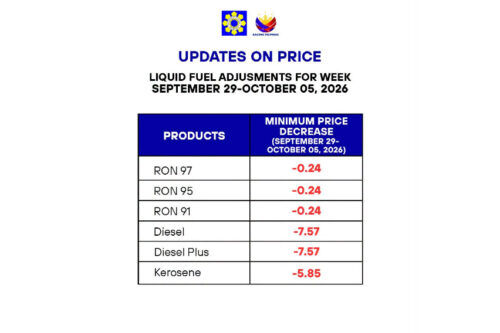
Diesel prices to go down by P7.57 per literPaulo Papa, Sep 28, 2026
-
Zigwheels PH weekly wrap: Sep. 21-25Paulo Papa, Sep 28, 2026
-
-
-








Featured Cars
- Latest
- Upcoming
- Popular
-
 Xpeng L03₱1.548 - 2.058 Million SRP Price ManilaMonthly Payments : ₱26,556 x 60Write a Review Get Exclusive Promos
 -
Xpeng X9₱3.858 - 4.058 Million SRP Price ManilaMonthly Payments : ₱66,185 x 60Write a Review Get Exclusive Promos
-
Kia EV3₱1.898 Million SRP Price ManilaMonthly Payments : ₱32,561 x 60Write a Review Get Exclusive Promos
-
GAC Aion UT₱1.068 Million SRP Price ManilaMonthly Payments : ₱18,322 x 60Write a Review Get Exclusive Promos
-
Jetour T2 Lightning i-DM₱2.488 - 2.688 Million SRP Price ManilaMonthly Payments : ₱42,682 x 604 (2 Reviews) Get Exclusive Promos









-
MINI 5 Door₱3.799 Million SRP Price ManilaMonthly Payments : ₱65,173 x 604.56 (18 Reviews) Get Exclusive Promos
-
MINI 3 Door₱3.28 - 4.499 Million SRP Price ManilaMonthly Payments : ₱56,270 x 604.53 (19 Reviews) Get Exclusive Promos
-
-
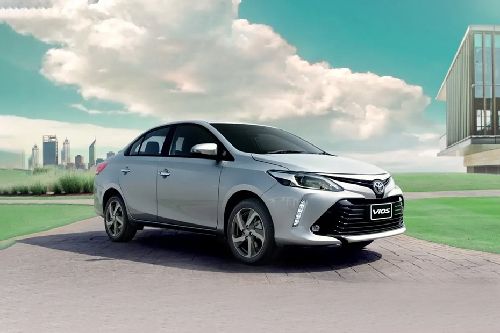
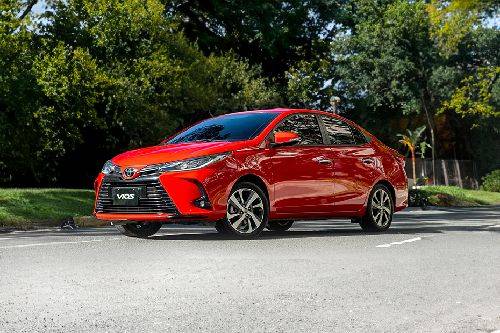
Toyota Vios₱738,000 - 908,000 SRP Price ManilaMonthly Payments : ₱12,660 x 604.28 (107 Reviews) Get Exclusive Promos
-
Kia Sonet₱778,000 - 1.218 Million SRP Price ManilaMonthly Payments : ₱13,346 x 604.36 (14 Reviews) Get Exclusive Promos




Latest Car Videos on Zigwheels

-
2026 Isuzu D-Max First Look | Zigwheels.Ph14 Sep, 2026 .
-
2026 Denza D9 Review | Zigwheels.Ph14 Sep, 2026 .
-
GWM Cannon SLUX 4x4 Walkaround | Zigwheels.Ph02 Sep, 2026 .
-
2026 Radar RD6 ECON EV Pickup Review | Zigwheels.Ph02 Sep, 2026 .
-
2026 BYD eMAX 7 Review | Zigwheels.Ph25 Aug, 2026 .
-
Electric or Diesel? BAIC B60e Beaumont rEV vs. B40 Pro Trailmaster Comparo | Zigwheels.Ph25 Aug, 2026 .
-
Our Best Small EV (So Far!) | Z-List Monthly Wrap | July 202614 Aug, 2026 .
-
2026 Mazda BT-50 Pangolin Review | Zigwheels.Ph14 Aug, 2026 .
-
The New BYD Seal 5 DM-i – Going Farther for Less! | First Look | Zigwheels.Ph04 Aug, 2026 .
-
The All-New BYD Atto 2 (EV & DM-i) – Electrified 2 Ways! | First Look | Zigwheels.Ph04 Aug, 2026 .










Car Articles From Carmudi
- journal
- advice
- financing
- insurance
-
PH auto industry YTD sales exceed 300K vehicles in Aug. 2026Ruben Manahan IV, Sep 29, 2026
-
Xpeng officially enters PH market; unveils X9, L03, Sep 25, 2026
-
Kia PH widens BEV stable with all-new EV3Ruben Manahan IV, Sep 21, 2026
-
PH-spec Ford Everest, Ranger get major revamp, Sep 04, 2026
-
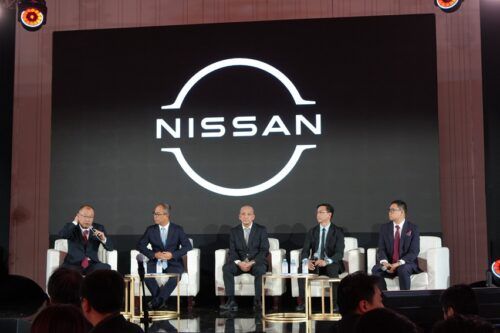
Nissan Navara PHEV, Primera EV PH launch set on NovemberRuben Manahan IV, Sep 03, 2026



-
Register & get OR/CR for your imported car the right wayCarmudi PH, Apr 16, 2025
-
How to handle a checkpoint: The right and wrong movesCarmudi PH, Apr 14, 2025
-
Don’t risk it: Here’s how to confirm driver’s license validityCarmudi PH, Apr 08, 2025
-
Your complete guide to a Non-Professional Driver’s LicenseCarmudi PH, Apr 04, 2025
-
Fixing errors or updating info? How to revise your driver’s licenseCarmudi PH, Apr 02, 2025





-
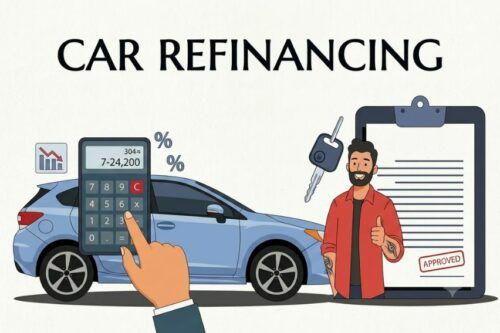
How to Compare Car Refinancing Offers in the PhilippinesCarmudi PH, Sep 29, 2026
-
Pwede ba mag-apply ng Sangla OR/CR kung di pa tapos bayaran ang car loan?Carmudi PH, Sep 24, 2026
-
Sangla OR/CR Car Requirements in the Philippines: Complete ChecklistCarmudi PH, Sep 21, 2026
-
First time buying a car? Here’s what to know about loansCarmudi PH, Apr 10, 2025
-
Fast-track your car loan payoff with these hacksCarmudi PH, Apr 06, 2025



-
How hidden facts and fake claims can ruin your insurance protectionCarmudi PH, Jun 10, 2026
-
Is your car ready for the next big downpour? The insurance traps most drivers missCarmudi PH, Jun 08, 2026
-
What to do if your car insurance claim is denied for premium non-paymentCarmudi PH, Jun 05, 2026
-
Buy these car accessories once & reap the benefits every renewalCarmudi PH, Jun 03, 2026
-
Top reasons Filipino drivers file Acts of Nature claimsCarmudi PH, Jun 01, 2026