How well do you understand traffic signs?
Light reading on the types of road signs
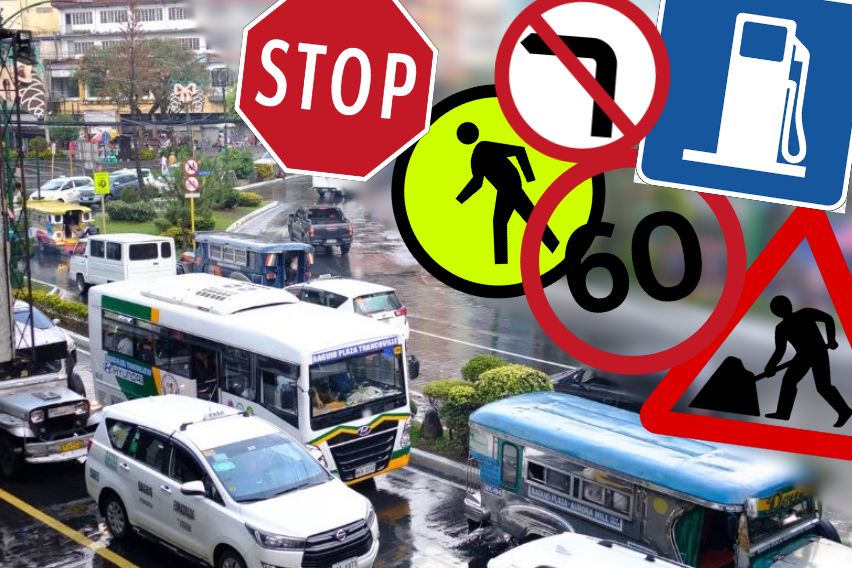
As the process of getting to own a car becomes easier, traffic in large Philippine cities such as Metro Manila, Cebu, and Davao has become more chaotic. We all have to live through them, unfortunately, but many proper drivers will undoubtedly have their blood boiling at the rise of the so-called “kamote driver/rider.”
KEY TAKEAWAYS
What are the types of traffic signs according to the Land Transportation Office?
According to the LTO, the types of traffic signs include regulatory, warning, and informative signs.Which government agency dictates the standards for Philippine traffic signs?
The government agency responsible for the standards of local traffic signs is the Department of Public Works and Highways.Oftentimes, these drivers or riders, who are named after the Filipino word for a popular root crop, are the types who are driven by ego and couldn’t care less about road etiquette. More often than not, however, adopting the kamote state of mind is borne out of ignorance of road rules and road signs in particular.
To help alleviate the issue and celebrate International Literacy Day, let’s review the basics of reading road signs.
To note, all of the information below is based on the Land Transportation Office’s (LTO) RO102 Comprehensive Driver’s Education module’s section on road signs, signals, and markings. It is by no means a complete list of all road signs in the Philippines, but it will aid one in becoming more literate when it comes to reading road signs. It may even save your life one day.
The basics
Even if you’re a mere commuter, you might have noticed that most road signs and markings come with certain shapes and colors. The aforementioned are clues as to what kind of signs they are.
Per standards set by the Department of Public Works and Highways (DPWH), sign panels should be 3 millimeters thick and made out of T6 aluminum or aluminum composite material coated in fluorocarbon - ensuring that they are corrosion-resistant and weather-proof.
Signs should also have a retroreflective sheeting, secured by a bracket railing, and supported by Class A structural concrete base.
Sign size, placement, means of illumination, and other parameters are also indicated by the DPWH under its Highway Safety Design Standards Manual, which is freely downloadable from the agency’s website.
Regulatory signs
Per LTO module RO102, signs with red backgrounds or borders are prohibitive regulatory signs. The aforementioned come with a red-bordered circular shape, often with a white background with a red slash over a symbol.
The said type of traffic sign consists of on-road behaviors or maneuvers that are not allowed on certain roads. It may come in the form of, but not limited to, the following:
- No turn signals
- No entry signs
- No entry for specific vehicle types
- No overtaking
Prohibitive road sign types on highways also indicate the maximum speed limit for a given area. In some instances, signs informing pedestrians to use a “ped xing” or an overpass also have the same design.
Prohibitive signs with red borders but with a rectangular shape are likewise utilized for parking and passenger loading/unloading regulations. The same goes for signs that indicate whether a zone is a proper jeepney or bus stop.
In some instances, prohibitive signs are also utilized to filter out vehicles that are too long or too heavy for a certain road. Weight, as standard, uses “T” for tons, while length is expressed with “m” for meters.
Also falling under the umbrella of regulatory signs are direction signs, which have a blue background. The said type of sign indicates the only direction on a particular road a motorist should follow.
On highways, a circular sign with a solid blue background is utilized to indicate the minimum speed limit.
Pursuant to Republic Act Number 8750, otherwise known as the Seatbelt law, the DPWH also uses a special square-shaped sign reminding motorists to fasten their seatbelts.
Circular signs with yellow backgrounds and black borders are also used to inform motorists to be aware of vulnerable road users such as cyclists, pedestrians, or children (when near school zones).
Other stories: |
Warning signs
Warning signs, which often come in a triangular shape, are used to warn road users of potential hazards on or near a road. Response to the aforementioned requires caution, and as LTO recommends, a reduction of travel speed.
The most common warning signs in the local setting are the warnings to watch out for the many types of road curves, intersections, and roundabouts. These, as mentioned, get a triangular shape and have a red border surrounding a black symbol.
The same design, albeit with some modifications, is also used for warning motorists of an upcoming narrowing of the road, a stop sign, or a traffic light. Specific road hazards, such as slippery roads, animal crossings, flood-prone areas, or landslide-prone areas, also use the same design.
Other warning signs that have a yellow field with black text or symbol provide warnings of an upcoming pedestrian crossing. Per the LTO, the said signs are likely paired with supplementary signs indicating the nature of the crossing (school, playground, disabled pedestrians) and a speed limit.
Road work or “road construction ahead” signs also use a triangular shape with red borders. The same goes for upcoming railroad crossings. Some areas also use an X-shaped sign with text combined with a white or yellow background for rail crossings.
A line or series of chevron signs is also used to guide motorists to follow the curvature of a road. Black and white chevrons pointing upwards are likewise used to indicate the wide column of an overpass structure or a median island.
Informatory signs
The third type of sign deployed by the DPWH and LTO is informative signs, which provide advice to road users about directions, locations of services, distances, and points of interest - among others.
Directional road signs in the Philippines, especially within big cities, come with a green background with white text and symbols. Otherwise, smaller towns and tourist spots utilize brown and white backgrounds for “finger board” and directional signs.
Depending on the city or town, a rectangular sign with a blue or white background is used to indicate the name of a street. Otherwise, a blue background with a white symbol is the standard for signs indicating the location of facilities such as gasoline stations, rest stops, hospitals, camp sites, airports, and many other services.
Final thoughts
Those are the basic road sign types as classified by the LTO. Pay attention to them, and you’ll be a slick but safe driver in no time.
But let’s get real, though. In some cases, these road signs often do not meet the standards set by the DPWH. In some cases, traffic signs aren’t visible enough due to damage or are obstructed by trees and other urban structures. And often, many of them are vandalized to oblivion. In the said cases, one’s defensive driving instincts and common sense should take precedence. It is also important to be alert, but at the same time, be kind to others on the road.
Also read:
Vehicles named after indigenous tribes
To conserve and protect: car brands in PH and their conservation projects
Connect with us through our various social media pages:
Facebook: https://www.facebook.com/ZigWheelsPhilippines
Instagram: https://www.instagram.com/zigwheelsph/

Sell your car at the best price
 Verified and genuine buyers
 Free listing
PIMS 2026


Trending & Fresh Updates
- Latest
- Popular
-

-
-
-
3 reasons to be excited about the iCAUR V27Cesar Miguel, Sep 25, 2026
-
3 reasons to consider the GAC E8 HEVCesar Miguel, Sep 21, 2026
-
-
-
First drive: Kia Sportage Turbo HybridCesar Miguel, Aug 18, 2026
-
First impressions: Geely EX2Cesar Miguel, Jun 18, 2026
-
Weighing down on car parkingPaulo Papa, Sep 24, 2026
-
Tips on how to prevent vehicle firesCesar Miguel, Mar 17, 2026
-
How to prepare your car for summerCesar Miguel, Mar 11, 2026







-
-
-
Xpeng formally enters PH marketRuben Manahan IV, Sep 25, 2026
-
Here’s why this family only buys ToyotasCesar Miguel, Sep 17, 2026
-
-
BYD Atto 2 EV vs. the competitionCesar Miguel, Aug 25, 2026
-
First drive: Kia Sportage Turbo HybridCesar Miguel, Aug 18, 2026
-
-
How to prepare your car for summerCesar Miguel, Mar 11, 2026
-
Tips on how to prevent vehicle firesCesar Miguel, Mar 17, 2026
-
Weighing down on car parkingPaulo Papa, Sep 24, 2026




You might also be interested in
- News
- Featured Stories
-
-
LTO ends Stradcom’s LTO-ID system usageRuben Manahan IV, Sep 14, 2026
-
-
-
-



-
-
-
-
First-class efficiency: Honda CR-VPaulo Papa, Nov 30, 2023
-
-



Featured Cars
- Latest
- Upcoming
- Popular
-
 Xpeng L03₱1.548 - 2.058 Million SRP Price ManilaMonthly Payments : ₱26,556 x 60Write a Review Get Exclusive Promos
 -
Xpeng X9₱3.858 - 4.058 Million SRP Price ManilaMonthly Payments : ₱66,185 x 60Write a Review Get Exclusive Promos
-
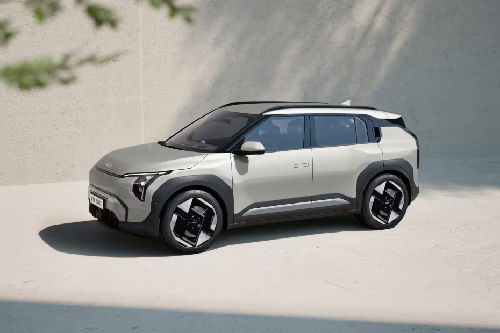
Kia EV3₱1.898 Million SRP Price ManilaMonthly Payments : ₱32,561 x 60Write a Review Get Exclusive Promos
-
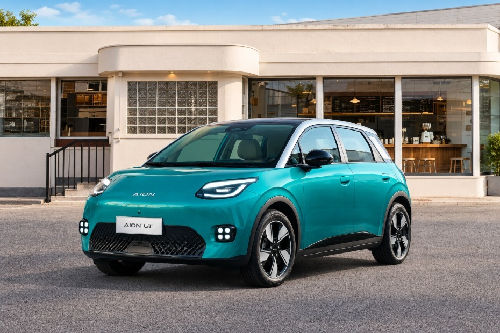
GAC Aion UT₱1.068 Million SRP Price ManilaMonthly Payments : ₱18,322 x 60Write a Review Get Exclusive Promos
-
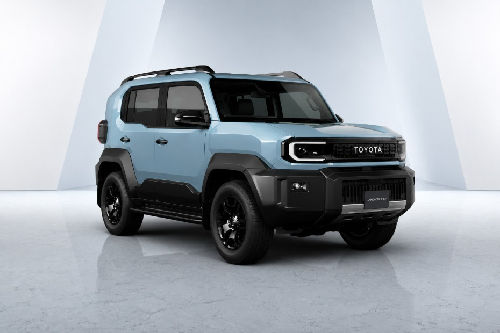
Jetour T2 Lightning i-DM₱2.488 - 2.688 Million SRP Price ManilaMonthly Payments : ₱42,682 x 604 (2 Reviews) Get Exclusive Promos





-
MINI 5 Door₱3.799 Million SRP Price ManilaMonthly Payments : ₱65,173 x 604.56 (18 Reviews) Get Exclusive Promos
-
MINI 3 Door₱3.28 - 4.499 Million SRP Price ManilaMonthly Payments : ₱56,270 x 604.53 (19 Reviews) Get Exclusive Promos
-
-
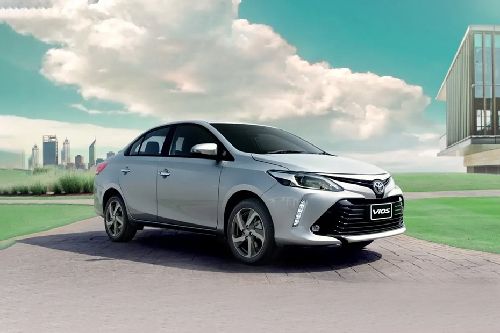
Toyota Vios₱738,000 - 908,000 SRP Price ManilaMonthly Payments : ₱12,660 x 604.28 (107 Reviews) Get Exclusive Promos
-
Kia Sonet₱778,000 - 1.218 Million SRP Price ManilaMonthly Payments : ₱13,346 x 604.36 (14 Reviews) Get Exclusive Promos




Latest Car Videos on Zigwheels

-
2026 Isuzu D-Max First Look | Zigwheels.Ph14 Sep, 2026 .
-
2026 Denza D9 Review | Zigwheels.Ph14 Sep, 2026 .
-
GWM Cannon SLUX 4x4 Walkaround | Zigwheels.Ph02 Sep, 2026 .
-
2026 Radar RD6 ECON EV Pickup Review | Zigwheels.Ph02 Sep, 2026 .
-
2026 BYD eMAX 7 Review | Zigwheels.Ph25 Aug, 2026 .
-
Electric or Diesel? BAIC B60e Beaumont rEV vs. B40 Pro Trailmaster Comparo | Zigwheels.Ph25 Aug, 2026 .
-
Our Best Small EV (So Far!) | Z-List Monthly Wrap | July 202614 Aug, 2026 .
-
2026 Mazda BT-50 Pangolin Review | Zigwheels.Ph14 Aug, 2026 .
-
The New BYD Seal 5 DM-i – Going Farther for Less! | First Look | Zigwheels.Ph04 Aug, 2026 .
-
The All-New BYD Atto 2 (EV & DM-i) – Electrified 2 Ways! | First Look | Zigwheels.Ph04 Aug, 2026 .

Car Articles From Carmudi
- journal
- advice
- financing
- insurance
-
PH auto industry YTD sales exceed 300K vehicles in Aug. 2026Ruben Manahan IV, Today
-
Xpeng officially enters PH market; unveils X9, L03, Sep 25, 2026
-
Kia PH widens BEV stable with all-new EV3Ruben Manahan IV, Sep 21, 2026
-
PH-spec Ford Everest, Ranger get major revamp, Sep 04, 2026
-
Nissan Navara PHEV, Primera EV PH launch set on NovemberRuben Manahan IV, Sep 03, 2026



-
Register & get OR/CR for your imported car the right wayCarmudi PH, Apr 16, 2025
-
How to handle a checkpoint: The right and wrong movesCarmudi PH, Apr 14, 2025
-
Don’t risk it: Here’s how to confirm driver’s license validityCarmudi PH, Apr 08, 2025
-
Your complete guide to a Non-Professional Driver’s LicenseCarmudi PH, Apr 04, 2025
-
Fixing errors or updating info? How to revise your driver’s licenseCarmudi PH, Apr 02, 2025



-
How to Compare Car Refinancing Offers in the PhilippinesCarmudi PH, Today
-
Pwede ba mag-apply ng Sangla OR/CR kung di pa tapos bayaran ang car loan?Carmudi PH, Sep 24, 2026
-
Sangla OR/CR Car Requirements in the Philippines: Complete ChecklistCarmudi PH, Sep 21, 2026
-
First time buying a car? Here’s what to know about loansCarmudi PH, Apr 10, 2025
-
Fast-track your car loan payoff with these hacksCarmudi PH, Apr 06, 2025



-
How hidden facts and fake claims can ruin your insurance protectionCarmudi PH, Jun 10, 2026
-
Is your car ready for the next big downpour? The insurance traps most drivers missCarmudi PH, Jun 08, 2026
-
What to do if your car insurance claim is denied for premium non-paymentCarmudi PH, Jun 05, 2026
-
Buy these car accessories once & reap the benefits every renewalCarmudi PH, Jun 03, 2026
-
Top reasons Filipino drivers file Acts of Nature claimsCarmudi PH, Jun 01, 2026