Volvo celebrates platinum years of seatbelt safety
3-point seatbelt was Volvo Design Engineer Nils Bohlin
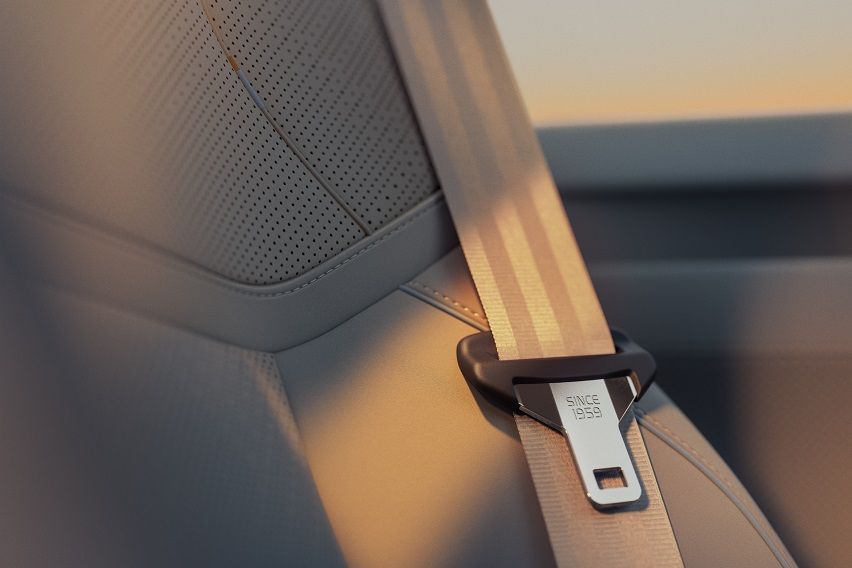
MANILA: Volvo is celebrating 70 years of saving lives with seatbelts.
KEY TAKEAWAYS
When did Volvo introduce the two-point seatbelt?
It was introduced in 1956 through the Amazon prototype.When did Volvo equip its cars with the three-point seatbelt?
It was equipped on all Swedish market Volvo cars in 1959.The Swedish carmaker was one of the first automobile manufacturers to introduce seatbelts to the European market with the 1956 Amazon prototype.
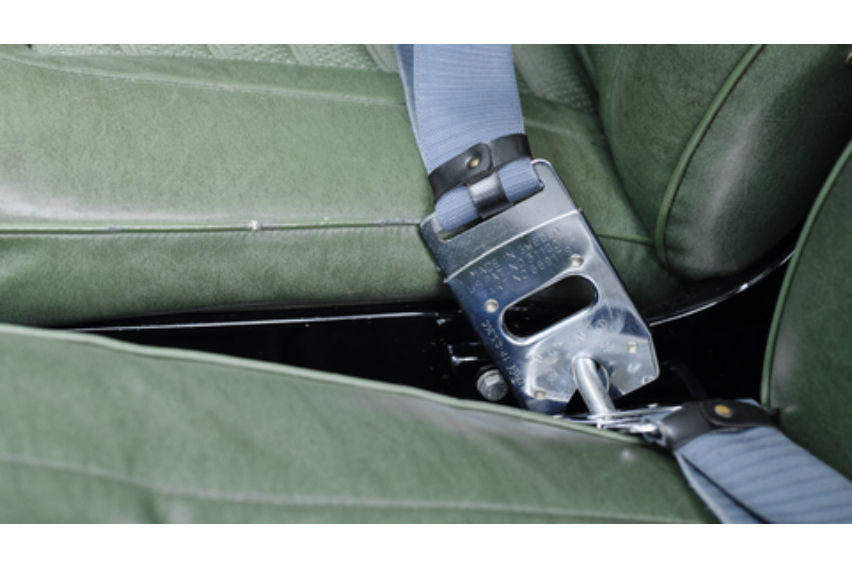 Photo from Volvo Cars
It had a two-point cross-chest diagonal belt, which Volvo noted was made available as an option on production models shortly afterwards.
 Photo from Volvo Cars
Three years later, Volvo became the first marque to fit three-point belts as standard. The Gothenburg-headquartered company set the template for the modern safety belt that’s fitted to all cars today.
Other stories: |
3-point safety belt
The three-point safety belt was created by Volvo Design Engineer Nils Bohlin, which consisted of a lap belt and a diagonal belt anchored at a low attachment point beside the seat.
 Photo from Volvo Cars
By 1959, the three-point safety belt was installed as standard in all Swedish market Volvo cars, and later in cars across the world as the patent was made available to all car makers free of charge.
This resulted in widespread availability and spurred the fitment of seatbelts as a legal requirement, helping to save millions of lives across the world.
 Photo from Volvo Cars
“The engineering innovation from Volvo seatbelts 70 years ago still plays a vital role in the design and engineering of modern Volvo models, with the newly launched EX60 mid-size SUV featuring the world’s first multi-adaptive safety belt,” Volvo wrote in a press release.
Multi-adaptive seatbelt
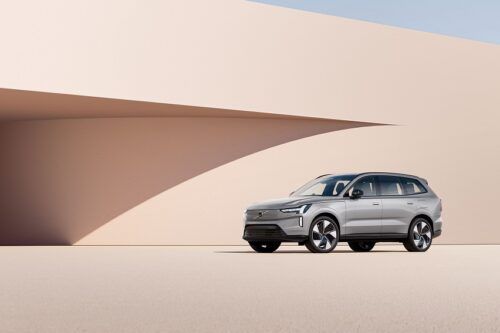
The world-first multi-adaptive seatbelt made its debut in the newest iteration of the Volvo EX60 mid-size sport utility vehicle.
This state-of-the-art safety belt uses real-time data input from advanced interior and exterior sensors to customize protection, adapting to the situation and individual occupant, taking into account their height, weight, seating position, and crash type.
A larger passenger in a serious crash, for example, will receive a higher belt load setting to help reduce the risk of head injury. Meanwhile, someone of smaller build in a milder crash will receive a lower belt load setting to reduce the risk of rib fractures.
As Volvo gathers more insights, the car can improve its understanding of the occupants, new scenarios, and response strategies; and thanks to over-the-air software updates, this can be applied to the car, so the technology will continuously improve over time.
“Volvo has always been at the forefront of safety evolution and innovation, and we’re pleased that we can continue to make new developments on such vital features like the seatbelt. The latest multi-adaptive seatbelt in the new EX60 is a testament to our pioneering technology and approach to safety that is continued today,” Volvo Cars United Kingdom Managing Director Nicole Melillo Shaw was quoted as saying.
Also read:
Volvo PH May 2025 MoM sales up by 550%
Volvo to release XC60 PHEV in PH?
XC60 becomes Volvo’s best-selling global model
Connect with us through our various social media pages:
Facebook: https://www.facebook.com/ZigWheelsPhilippines
Instagram: https://www.instagram.com/zigwheelsph/

Sell your car at the best price
 Verified and genuine buyers
 Free listing
Volvo Car Models
-

Volvo EX30 -
Volvo XC90 -
Volvo XC60 -
Volvo XC40 -
Volvo XC40 Recharge -
Volvo S90 -
Volvo C40 Recharge -
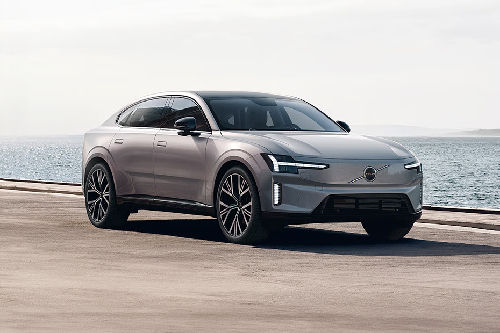
Volvo ES90 -
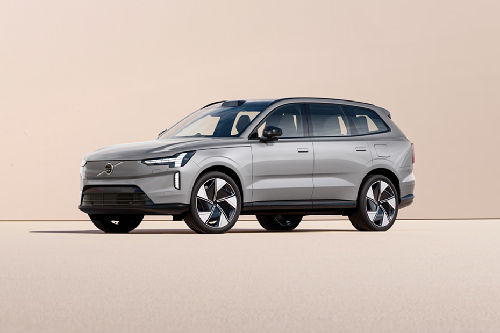
Volvo EX90
PIMS 2026


Trending & Fresh Updates
- Latest
- Popular
-
 Diesel prices set to spike anewPaulo Papa, Jun 08, 2026
 -
ZW weekly wrap: Jun 1-5Paulo Papa, Jun 08, 2026
-
-
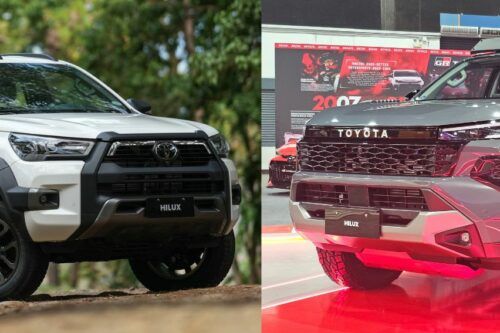
Toyota Hilux: old vs newCesar Miguel, Jun 05, 2026
-
-
Check out the 6 colors of the Geely EX5 EM-iPaulo Papa, Jun 02, 2026
-
-
BYD DM-i lineup conquers Southern LuzonCesar Miguel, Mar 10, 2026
-
-
Tips on how to prevent vehicle firesCesar Miguel, Mar 17, 2026
-
How to prepare your car for summerCesar Miguel, Mar 11, 2026
-





-
-
Jaecoo J5 EV reaches PH marketPaulo Papa, Jun 05, 2026
-
-
-
-
5 reasons to be excited about the Geely EX2Paulo Papa, May 05, 2026
-
BYD DM-i lineup conquers Southern LuzonCesar Miguel, Mar 10, 2026
-
-
How well do you understand traffic signs?Cesar Miguel, Sep 09, 2025
-
-
Here are ways to avoid road ragePaulo Papa, Sep 23, 2025



You might also be interested in
- News
- Featured Stories
-
Diesel prices set to spike anewPaulo Papa, Jun 08, 2026
-
ZW weekly wrap: Jun 1-5Paulo Papa, Jun 08, 2026
-
-
The Wrap: 10th PIMS EditionCesar Miguel, Jun 08, 2026
-
-
GWM PH to launch Haval H7 next weekPaulo Papa, Jun 08, 2026

-
-
-
-
Check out Volvo EX90’s closest rivalsCesar Miguel, Mar 20, 2026
-
Women in the Philippine auto industryPaulo Papa, Mar 13, 2026
-


Volvo Featured Cars
- Latest
- Popular
-
 Volvo ES90₱5.265 Million SRP Price ManilaMonthly Payments : ₱90,323 x 60Write a Review Get Exclusive Promos
 -
Volvo EX90₱5.99 Million SRP Price ManilaMonthly Payments : ₱102,761 x 604 (1 Reviews) Get Exclusive Promos
-
-
Volvo XC60₱4.49 Million SRP Price ManilaMonthly Payments : ₱77,028 x 604.25 (12 Reviews) Get Exclusive Promos
-
Volvo EX30₱2.99 Million SRP Price ManilaMonthly Payments : ₱51,294 x 604.5 (4 Reviews) Get Exclusive Promos
-
-
Volvo XC60₱4.49 Million SRP Price ManilaMonthly Payments : ₱77,028 x 604.25 (12 Reviews) Get Exclusive Promos
-
Volvo XC40₱3.69 Million SRP Price ManilaMonthly Payments : ₱63,303 x 604.58 (12 Reviews) Get Exclusive Promos
-
Volvo XC40 Recharge₱3.99 Million SRP Price ManilaMonthly Payments : ₱68,450 x 604.17 (6 Reviews) Get Exclusive Promos
-
Volvo S90₱4.49 Million SRP Price ManilaMonthly Payments : ₱77,028 x 604.31 (13 Reviews) Get Exclusive Promos
Volvo Car Articles From Carmudi
- journal
-
Volvo ES90, EX90 BEVs make PH debutPaulo Papa, Feb 25, 2026
-
Volvo PH adds PHEV trims in XC60, XC90 lineup to expand NEV rosterRuben Manahan IV, Jul 03, 2025
-
Volvo Cars changes electrification strategyPaulo Papa, Sep 11, 2024
-
Volvo PH to slash P500k on select models for latest promoRuben Manahan IV, May 02, 2024
-
Volvo Recharge models now in PHRuben Manahan IV, Oct 04, 2023