PH saw over 19k road accidents from Jan-Aug 2025
AAP brought in experts to help fix the issue
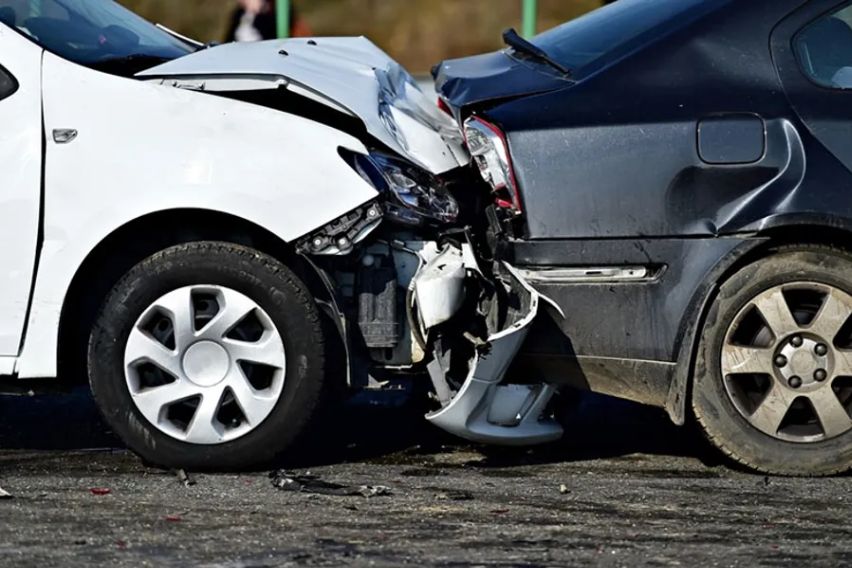
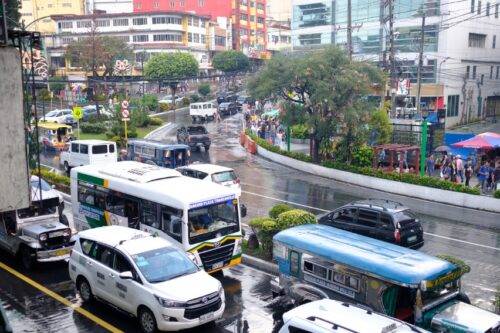
MANILA: The Philippines is currently experiencing a vehicle crash epidemic, with 19,950 incidents recorded by the Philippine National Police Highway Patrol Group (PNP-HPG) from January-August 2025.
KEY TAKEAWAYS
How many road crash incidents in the country were recorded by the Philippine National Police - Highway Patrol Group from January-August 2025?
The PNP-HPG recorded 19,550 road crash incidents in the country from January-August 2025.Which highly urbanized center (HUC) saw the most road crash incidents since 2020?
According to data collected by WHO Philippines, the HUC that saw the most road crash incidents since 2020 is Quezon City.The said figures were shared by Police Senior Master Sergeant (PSMS) Christopher Jaway at the 2025 “Meeting With the Experts” road safety conference organized by the Automobile Association of the Philippines (AAP).
Department of Health Secretary Teodoro Herbosa, who also shared his insights as a trauma surgeon and a public official at the event, described the aforementioned as a public health problem.
“That’s our number one cause of death for that age group (five to 25 years old), imagine you’re healthy and the number one cause of death is [becoming> road kill. That’s a public health problem if you ask me. That’s a very major health problem,” Herbosa said.
“Why am I talking road safety when I have so many other problems in public health? Why shouldn’t I? It is the number one killer for young people. It is the top five in the top ten killers. It is a public health problem, and there is a silent epidemic of road deaths in the country,” Herbosa added.
In shedding more light on the matter, Dr. John Juliard Go, the Technical Director of the World Health Organization - Philippines, presented more data regarding the land transportation accident issue the country currently faces.
Specifically, the data he presented comes from the Philippines Statistics Authority’s (PSA) collated data from nationwide issuances of death certificates from municipal and city civil registrar’s offices.
From 2021-2023, the percentage of deaths due to land transportation accidents compared to total deaths has been on a climb. By 2023, the same data set showed that 1.9 percent of total deaths that year were caused by road crashes.
Furthermore, 53 percent of the said traffic fatalities are vulnerable road users, such as:
- Two or three-wheeled vehicles - 21 percent
- Pedestrians - 23 percent
- Cyclists - Six percent
- Micro-mobility devices (e-scooter) - three percent
The rest, or 47 percent, were using larger (four-wheeled or more) vehicles. Among the provinces, the highest number of road traffic deaths was in Pangasinan. Nueva Ecija and Batangas are also within the top five. Among highly urbanized centers, Quezon City has seen the most road crash deaths since 2020.
Other stories: |
Underlying causes
Why is this happening? Well, the subject matter experts had something to share in this regard.
PSMS Jaway’s perspective as a road crash investigator revealed that unsafe driver attitudes and behaviors, including exceeding posted speed limits, aggressive driving, distracted driving, ignoring traffic laws, and failing to yield to other drivers and pedestrians, are the primary causes.
For the larger picture, Dr. Go of WHO Philippines further pointed out the challenges to road safety. Particularly notable are the unsafe road designs for pedestrians, cyclists, and motorists. Data integration between the PSA, DOH, the Metropolitan Manila Development Authority (MMDA), and the Land Transportation Office (LTO) on road accident statistics is likewise nonexistent.
And while there are laws present for speeding, drunk driving, helmet use, and child restraints, there is still the matter of weak enforcement, fragmented governance, and weak prioritization.
Also pointed out by the WHO official was the large gaps in policies regarding in-vehicle safety equipment. Helmet fastening is still not required by law. There are also no laws present mandating pedestrian protective equipment on cars, anti-lock braking systems, and stability control systems.
There is hope
From his experience and studies as a former professor at the University of the Philippines, DOH Secretary Herbosa mentioned that all of these road crashes are actually preventable.
“These studies have all pointed to one unshakable truth: that all road crashes are preventable. This could be averted via the victory of good policy, good science, and collective action on a whole-of-society level,” Herbosa said.
To carry about this lofty goal, MMDA Head of Traffic Education Division Edison Nebrija Jr. presented the Metro Manila Road Safety Action Plan. The said plan, which is hoped to be enacted and carried out until 2027, involves 10 proposed projects that are seen to help reduce road crash incidents, at least for Metro Manila.
These projects include:
- Traffic bottleneck improvement
- Further improvement of traffic corridors
- Improvement of intersections
- Traffic Signal System upgrades
- Enhancement of traffic safety and education
- Enhancement of Intelligent Transport System (ITS)
- Development of a database system
- Strengthening of traffic management planning and plan implementation
- Strengthening exterior coordination of MMDA
Dr. Tho Bella Dinh-Zarr, a senior advisor for the Public Health and Transportation to the Federation Internationale de l'Automobile (FIA) and Traffic Injury Research Foundation (TIRF), as well as the acting chairman of the United States National Transportation Safety Board (NSTB), also talked about the importance of crash investigation.
“Through my past work in investigating aviation, rail, and other transportation disasters, I know that the most important work we can do is prevent deadly crashes before they happen. By doing in-depth injury prevention-focused investigations based on the “Five I Framework,” we can turn tragedy into knowledge to help ensure that every family makes it home safely,” Dr. Dinh-Zarr said.
The Five I Framework, which Dr. Dinh-Zarr founded, consists of the following key points
- In-depth - complete, detailed timeline of an incident, along with identifying risk factors and identifying similarities to previous crashes.
- Impartial - neutral and impartial conduct of an investigation in connection with technical data, subject matter experts, and the investigators themselves.
- Immediate - prompt data collection and quick usage of gathered data for timely safety reform.
- Independent - tapping independent organizations for safety recommendations.
- Injury prevention - identification of factors that could have prevented the crash or could have increased the survivability of those involved. Data collected to be used in practical recommendations for safety reform and new policies.
All the aforementioned, as AAP pointed out, takes the focus out of finding who’s at fault. Instead, the Five I Framework focuses on learning from crashes to prevent them from happening again.
FIA Secretary General for Automobile Mobility Willem Groenwald, likewise shared his organization’s enthusiasm for collaborating with local entities to further promote safer, cleaner, and more sustainable mobility.
Together with FIA’s members like the AAP, the FIA, and the FIA Foundation, it will have a larger reach for its projects. Among the aforementioned are helmet distribution activities, road safety campaigns, road safety capacity building programs, and the building of capacities for road safety research.
Also read:
Isuzu-backed Camacho gets Rally, Rallycross Driver of the Year awards from AAP
PHRX gets boost from AAP to further promote rallying
Omoda E5 does 442kms in recent AAP test
Connect with us through our various social media pages:
Facebook: https://www.
Instagram: https://www.

Sell your car at the best price
 Verified and genuine buyers
 Free listing
MIAS 2026


Trending & Fresh Updates
- Latest
- Popular
-

-
Porsche Q1 2026 sales slide by 15%Ruben Manahan IV, May 14, 2026
-
-
-
-
Denza D9: 3 reasons to buyPaulo Papa, May 08, 2026
-
-
BYD DM-i lineup conquers Southern LuzonCesar Miguel, Mar 10, 2026
-
-
Tips on how to prevent vehicle firesCesar Miguel, Mar 17, 2026
-
How to prepare your car for summerCesar Miguel, Mar 11, 2026
-







-
BYD gives 2026 Seagull more range, techRuben Manahan IV, May 12, 2026
-
GAC's AEP 3.0 platform now seen in Aion VPaulo Papa, May 11, 2026
-
-
-
-
-
BYD DM-i lineup conquers Southern LuzonCesar Miguel, Mar 10, 2026
-
-
-
How well do you understand traffic signs?Cesar Miguel, Sep 09, 2025
-
-
Here are ways to avoid road ragePaulo Papa, Sep 23, 2025






You might also be interested in
- News
- Featured Stories
-
-
Porsche Q1 2026 sales slide by 15%Ruben Manahan IV, May 14, 2026
-
-
-
MG G50 PHEV gets warm welcome in PHRuben Manahan IV, May 14, 2026
-





Featured Cars
- Latest
- Upcoming
- Popular
-

-
GWM Haval Menglong PHEV₱2.05 Million Expected Price Makati CityMonthly Payments : ₱35,168 x 604 (2 Reviews) Get Exclusive Promos
-
-
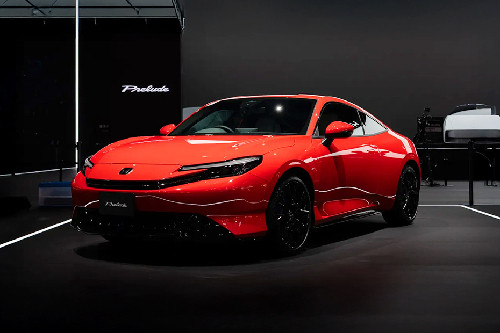
Honda Prelude₱3.498 Million SRP Price Makati CityMonthly Payments : ₱60,009 x 605 (1 Reviews) Get Exclusive Promos
-
GAC GS8 HEV₱2.488 Million SRP Price Makati CityMonthly Payments : ₱42,682 x 604 (1 Reviews) Get Exclusive Promos







-
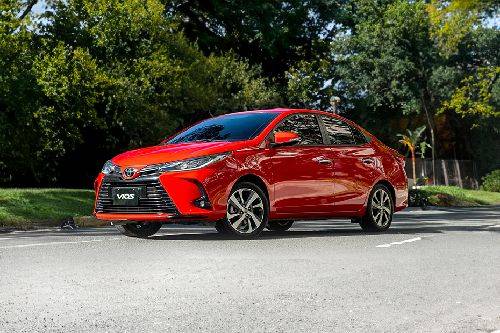
Toyota Vios₱738,000 - 908,000 SRP Price Makati CityMonthly Payments : ₱12,660 x 604.28 (107 Reviews) Get Exclusive Promos
-
Kia Sonet₱778,000 - 1.178 Million SRP Price Makati CityMonthly Payments : ₱13,346 x 604.36 (14 Reviews) Get Exclusive Promos
-
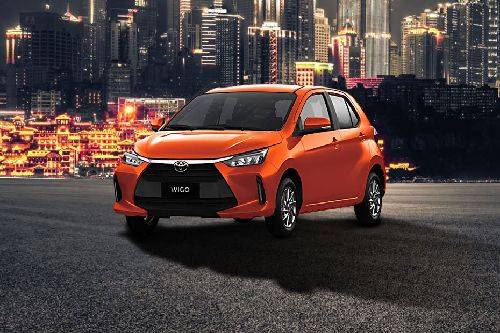
Toyota Wigo₱615,000 - 735,000 SRP Price Makati CityMonthly Payments : ₱10,550 x 604.19 (90 Reviews) Get Exclusive Promos
-
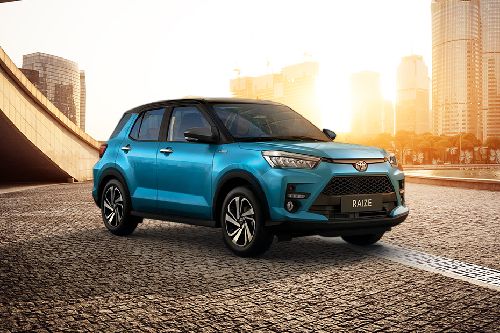
Toyota Raize₱757,000 - 1.069 Million SRP Price Makati CityMonthly Payments : ₱12,986 x 604.19 (46 Reviews) Get Exclusive Promos
-
Toyota Hilux₱891,000 - 2.46 Million SRP Price Makati CityMonthly Payments : ₱15,285 x 604.27 (92 Reviews) Get Exclusive Promos


Latest Car Videos on Zigwheels

-
2026 MG G50 PHEV First Look | Zigwheels.Ph11 May, 2026 .
-
2026 Denza B8 - Land Cruiser Killer? | POV First Look | Zigwheels.Ph11 May, 2026 .
-
2026 Mitsubishi Xpander GLS Review | Zigwheels.Ph11 May, 2026 .
-
Top 9 Hybrids Under P1.5M | Z-List11 May, 2026 .
-
2026 Jetour T1 Lightning Spec Guide22 Apr, 2026 .
-
All the New Cars at MIAS 2026! | Zigwheels.Ph22 Apr, 2026 .
-
2026 Honda Prelude First Look | Zigwheels.Ph14 Apr, 2026 .
-
It's the Sealion 7 and Atto 2! BYD Tech Tour at MIAS 2026 | Zigwheels.Ph14 Apr, 2026 .
-
Jaecoo J5 Revealed at MIAS 2026! | Zigwheels.Ph14 Apr, 2026 .
-
DENZA Makes Its Grand Entrance! | MIAS 2026 | Zigwheels.Ph14 Apr, 2026 .








Car Articles From Carmudi
- journal
- advice
- financing
- insurance
-
Isuzu PH upgrades Santa Rosa dealership to meet global outlet standardsRuben Manahan IV, May 13, 2026
-
GAC PH updates Aion V with new AEP 3.0 architecturePaulo Papa, May 13, 2026
-
Changan, Mercedes-Benz boost Q1 2026 EV sales in PH, May 11, 2026
-
Lexus PH launches heavily-updated IS, May 07, 2026
-
10th PIMS to feature 17 auto brands, 150 carsRuben Manahan IV, May 07, 2026



-
Register & get OR/CR for your imported car the right wayCarmudi PH, Apr 16, 2025
-
How to handle a checkpoint: The right and wrong movesCarmudi PH, Apr 14, 2025
-
Don’t risk it: Here’s how to confirm driver’s license validityCarmudi PH, Apr 08, 2025
-
Your complete guide to a Non-Professional Driver’s LicenseCarmudi PH, Apr 04, 2025
-
Fixing errors or updating info? How to revise your driver’s licenseCarmudi PH, Apr 02, 2025





-
First time buying a car? Here’s what to know about loansCarmudi PH, Apr 10, 2025
-
Fast-track your car loan payoff with these hacksCarmudi PH, Apr 06, 2025
-
Pasalo Car Financing: How it works & what to watch out forCarmudi PH, Apr 03, 2025
-
Car loan issues? Here’s how to resolve disputes in the PhilippinesCarmudi PH, Mar 22, 2025
-
Need better auto loan terms? Here’s how to refinanceCarmudi PH, Mar 21, 2025




-
Travelling with pets in 2026: Essential insurance & safety tips every driver must knowCarmudi PH, May 13, 2026
-
What is legal assistance car insurance coverage? A must-read guide for car ownersCarmudi PH, May 12, 2026
-
How to verify if your car insurance company is legit (Insurance Commission checklist)Carmudi PH, May 08, 2026
-
How SRCC coverage protects your car during civic unrestCarmudi PH, May 06, 2026
-
Does standard car insurance cover engine damage? Here’s what you need to knowCarmudi PH, May 04, 2026