Plush people carrier skirmish: Hyundai Staria HEV vs. BYD eMAX 9 DM-i
Tech-heavy, electrified people carriers compared specs-wise
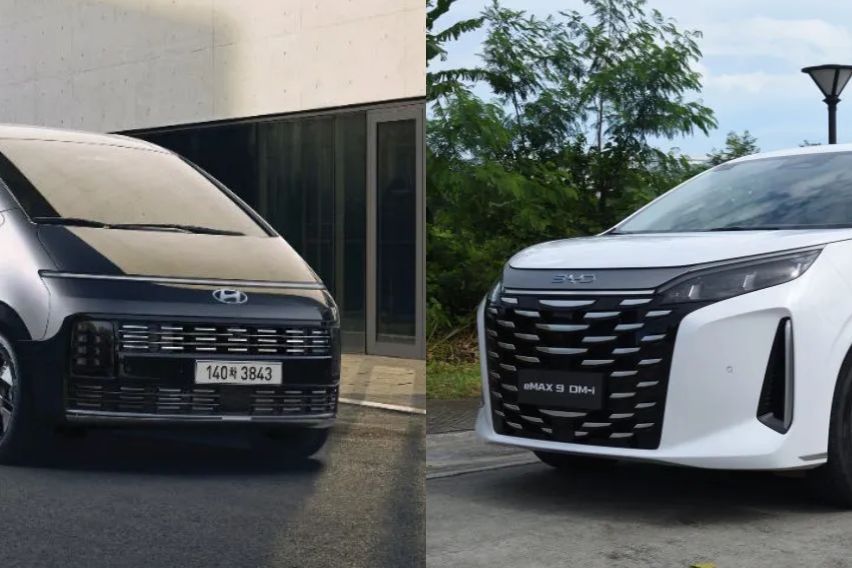
Three-row people carriers such as vans and multi-purpose vehicles (MPV) are, without a doubt, some of the most popular vehicle body types in the Philippine market.
KEY TAKEAWAYS
What is the price of the Hyundai Staria HEV in the Philippines?
The Hyundai Staria HEV in the Philippines has a price ranging from P1.499 million-P3.199 million.How much horsepower and torque can the Hyundai Staria HEV produce?
The Hyundai Staria HEV can produce up to 242 horsepowera and 265 Newton-meters of torque.And who can blame Filipinos? We are family-oriented and do not want to leave anyone out on fun road trips. As such, we take to these sizeable rides like fish to water.
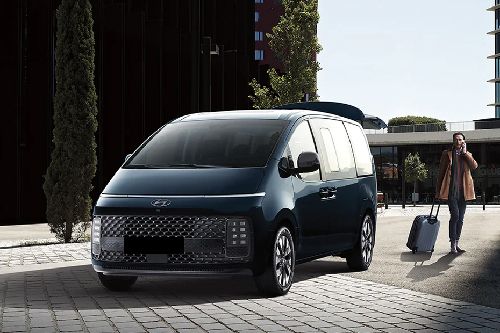
Recently, however, the van segment has taken a huge leap forward by incorporating electrified powertrains. In a more recent example, this is exemplified by the Hyundai Staria HEV, which, as hinted at by its name, is now a hybrid nameplate.
Earlier still was the introduction of the BYD eMAX 9 DM-i - a plug-in hybrid electric vehicle (PHEV) nameplate that expanded BYD Cars Philippines’ portfolio to include electrified vans.
On that note, how does the newer Hyundai Staria HEV compare against the BYD eMAX 9 DM-i? Let’s find out here by comparing the respective top-spec trim’s specifications and features.
Powertrain
Starting with the Hyundai Staria HEV, it uses a 1.6-liter turbocharged gasoline engine paired with a hybrid system. At maximum, this powertrain can generate up to 242 horsepower (hp) and 265 Newton-meters (Nm) of torque. All variants of the updated Staria come with a six-speed automatic gearbox sending power to the vehicle’s front wheels.
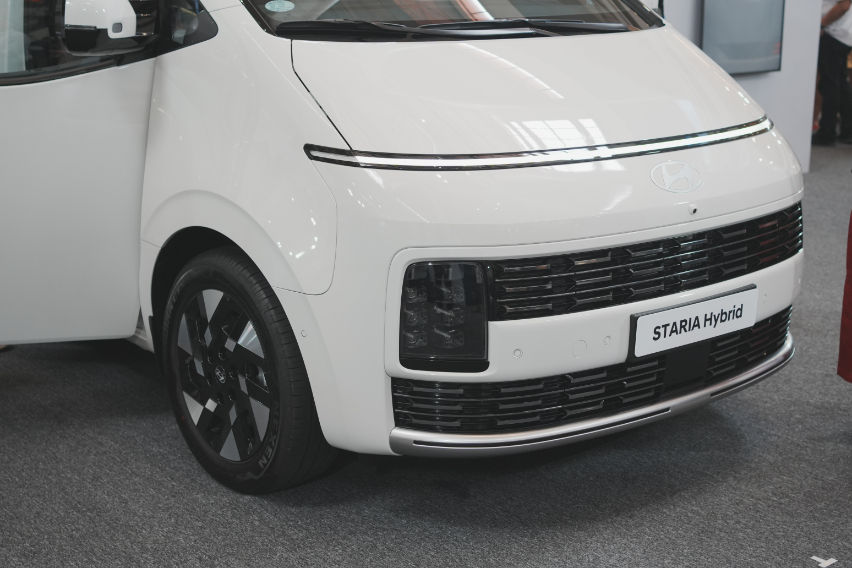 Photo by Juan Paulo Papa
Keeping the Staria HEV balanced in corners is the e-Handling system. It also comes with the Hyundai-developed e-Ride, which is an active damping system that is able to maintain a smooth ride quality even when going through bumps or during rapid acceleration.
For its hardware, the Staria HEV uses a front MacPherson strut and a multi-link suspension for the rear. It also has front and rear disc brakes.
Comparatively, the BYD eMAX 9 DM-i, as mentioned above, uses a PHEV powertrain, meaning that it has a selectable electric-only range of 170 kilometers (km) for the top-spec Premium trim, as well as the ability to be topped up using the appropriate electric vehicle (EV) charging station.
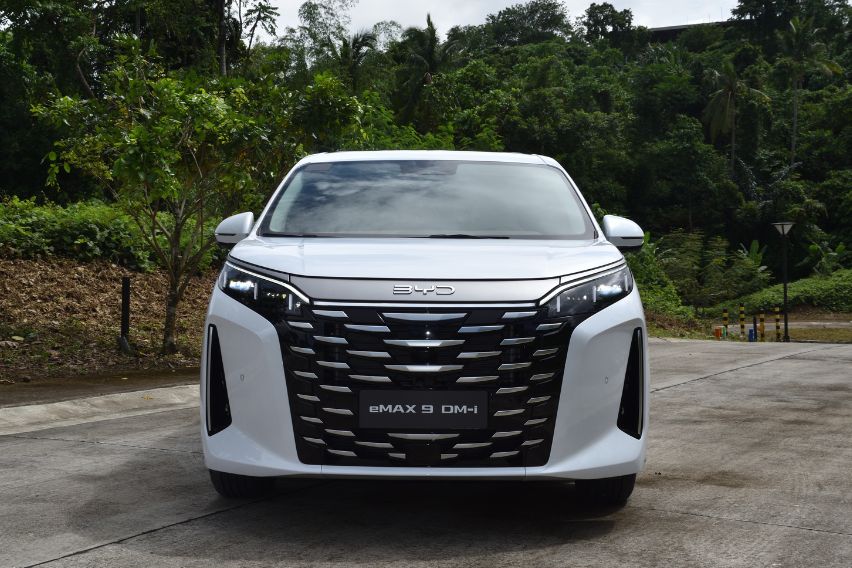 Photo by Cesar Guiderone Miguel
Its engine components, meanwhile, consist of a 1.5-liter turbocharged gasoline four-banger paired with a single electric motor. Like the Hyundai nameplate, the BYD is also a front-wheel-drive model, but it does have a beefier output of 267 hp and 315 Nm of torque.
For its intelligent damping system, the BYD eMAX 9 DM-i uses the DiSus-C, which can make quick, real-time adjustments during cornering and on bumpy roads to balance the car and provide a smoother, more stable ride.
With regard to powertrains, the BYD eMAX 9 DM-i is, at least on paper, the more powerful model. Both do come with intelligent damping systems, but the BYD offering does trump the Hyundai Staria HEV as it can be charged like a full-blown EV.
Moreover, the EV-only range on the eMAX 9 offers it several advantages that are not present on the Hyundai nameplate. The two do get their own regenerative braking systems, but the BYD’s single-speed transmission makes it act more like an EV, unlike the Hyundai, which has real physical gears.
Other stories: |
Exterior
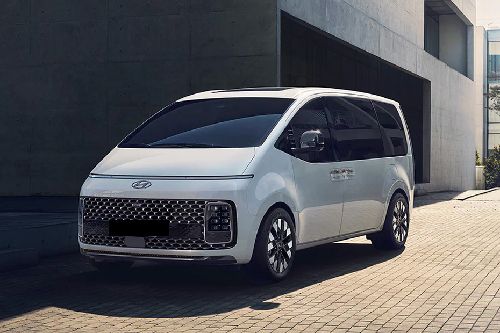
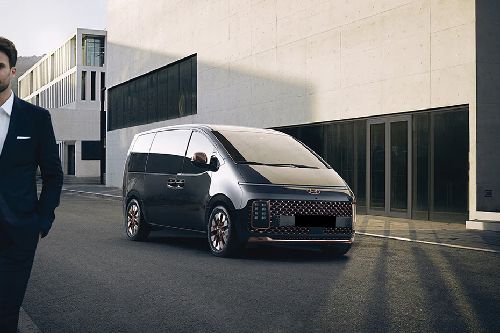
On the outside, both the Hyundai Staria HEV and the BYD eMAX 9 DM-i get appealing designs that lean towards elegance and a feeling of premiumness.
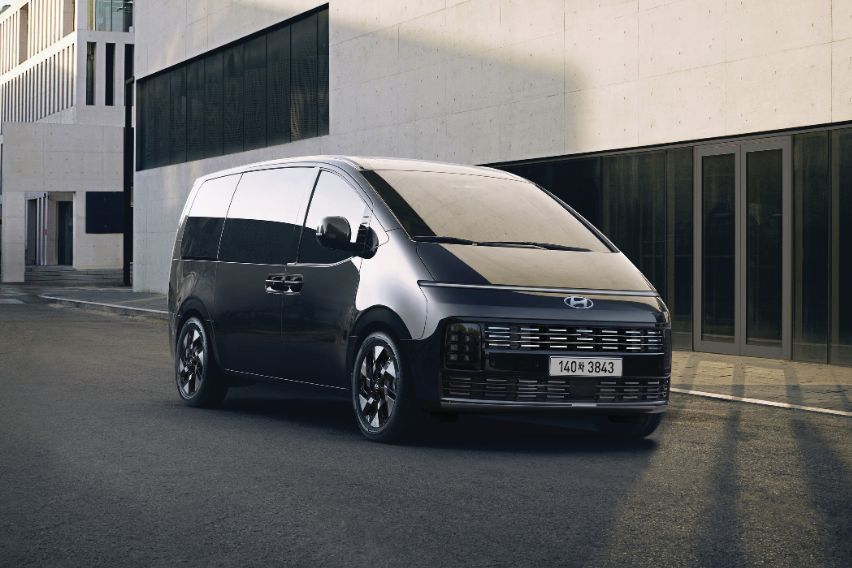 Photo from Hyundai Motor Philippines Incorporated
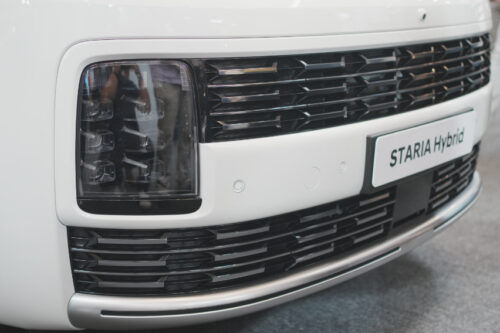
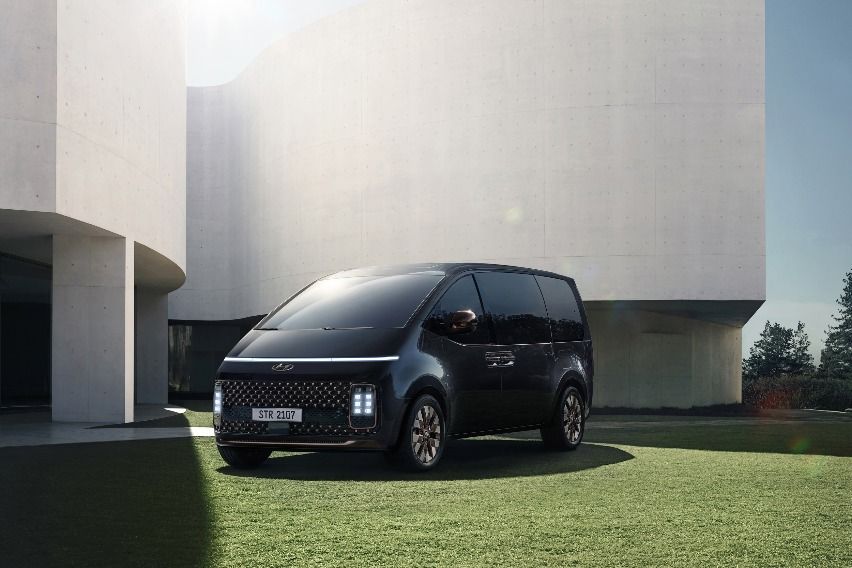
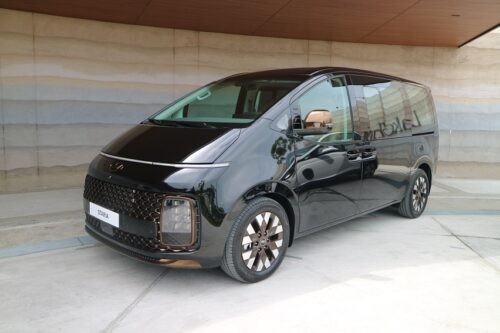
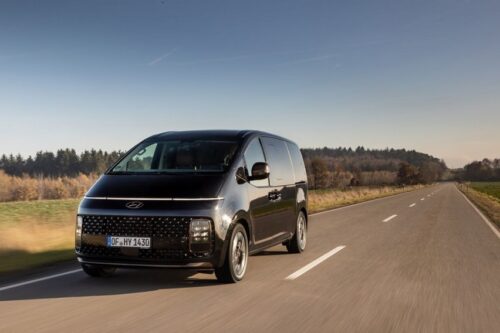
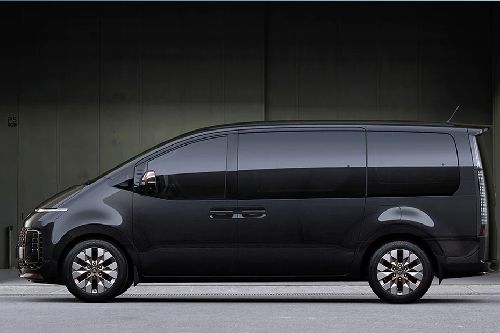
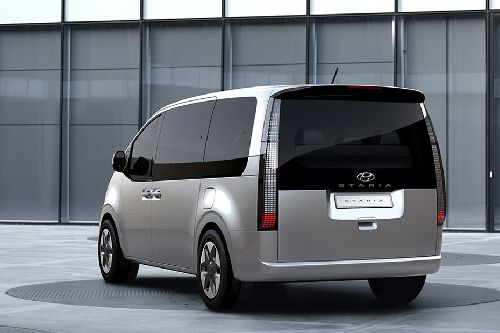
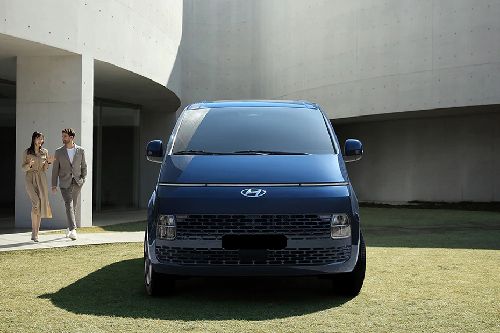
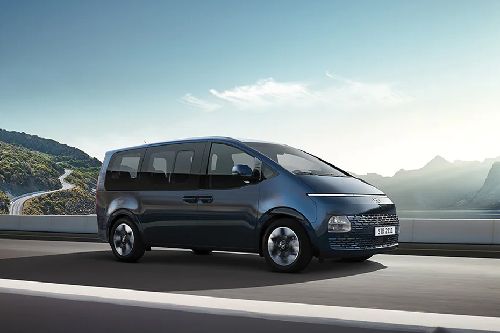
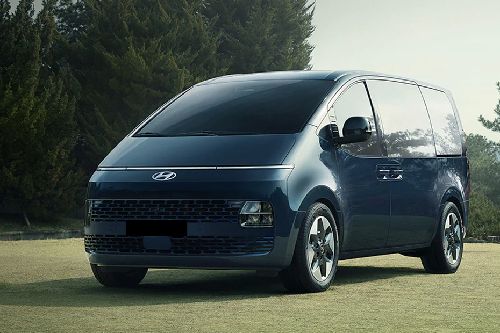
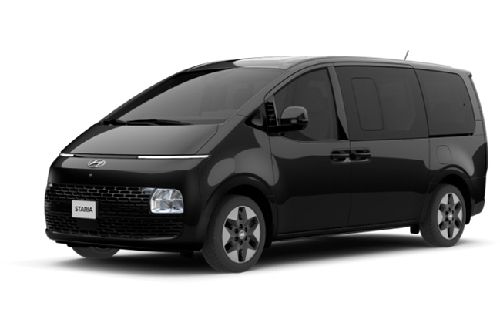
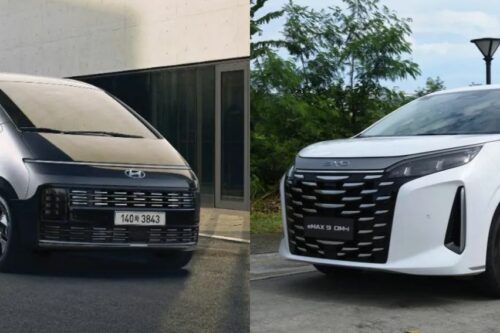
However, the Hyundai’s look is more unique and fluidic, with practically no transitions and borders between the tip of the car’s fascia, its windshield, and its roof. These go together with full-width LED lighting fixtures for the front and rear. Otherwise, it will have power-sliding doors for easy ingress and egress.
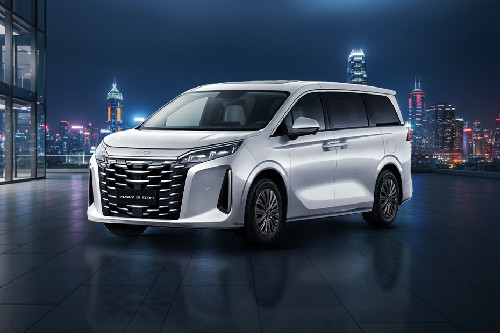
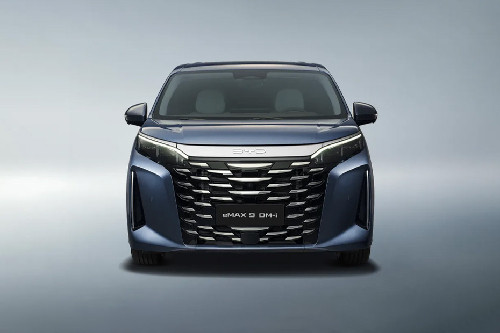
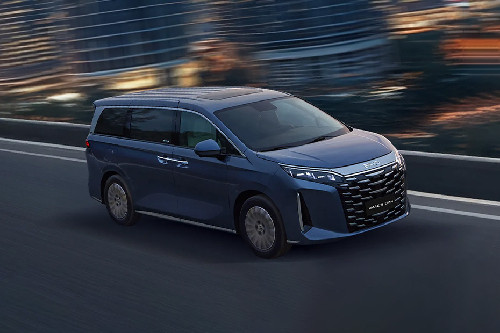
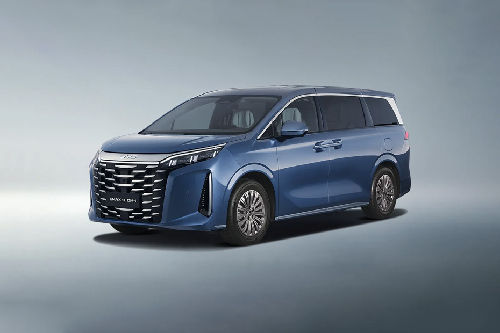
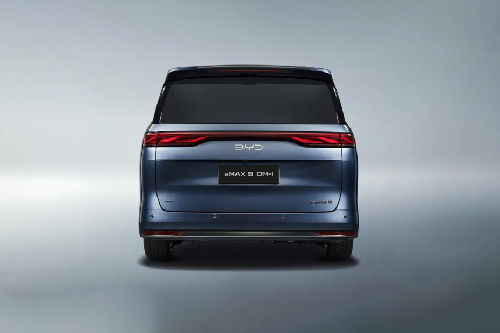
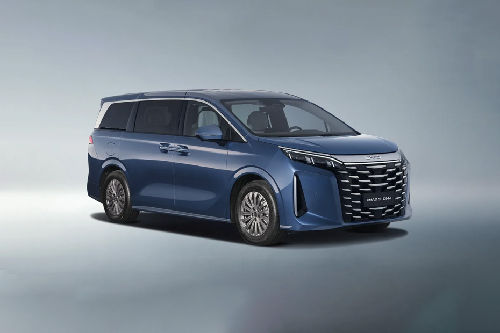
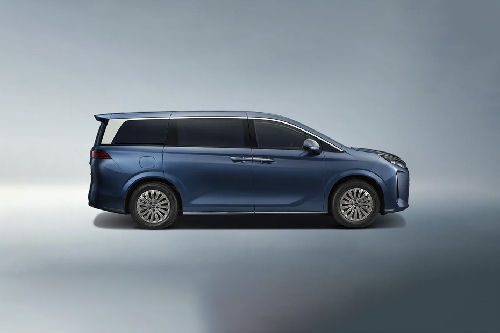
The appearance of the BYD eMAX 9 DM-i, meanwhile, leans more towards a traditional van. It gets a regular-looking hood with a standard van-like silhouette, but its highlights include a commanding grille equipped with an intricately patterned mesh.
Other design elements of the BYD nameplate appear traditional as well. It has sharp LED headlamp clusters, a rear LED lightbar, and sliding doors just like its Hyundai rival.
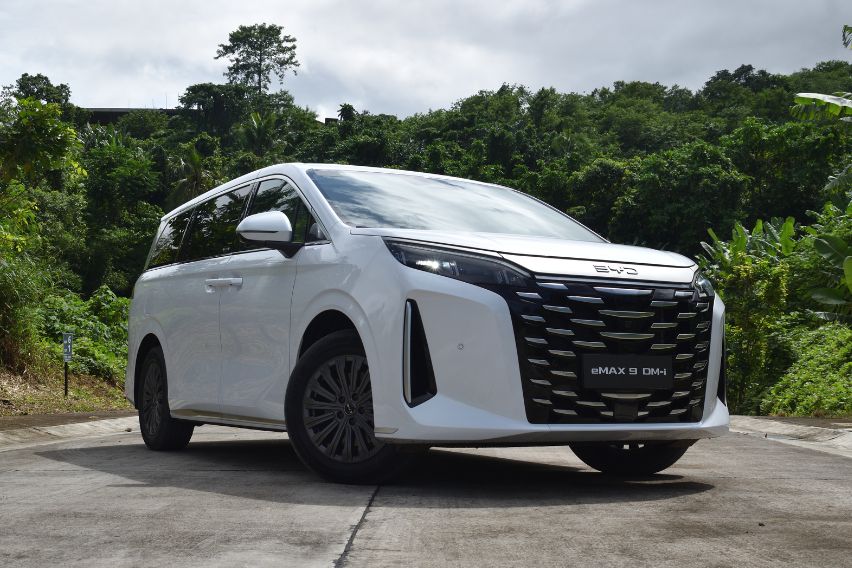 Photo by Cesar Guiderone Miguel
Notably, exterior features common between the two nameplates include, but are not limited to:
- Power tailgate
- Automatic headlamps
- Rear spoiler
- Power-folding/adjustable side mirrors
- Rain-sensing wipers
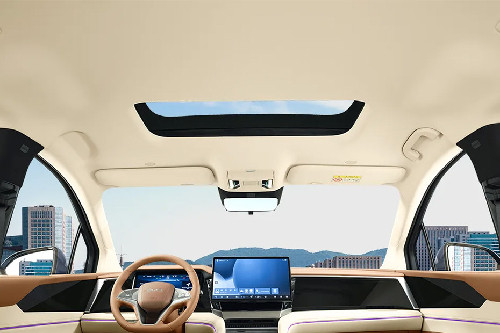
On the one hand, the BYD gets a static panoramic sunroof, whereas the Hyundai has a power-tilting dual sunroof. Completing the look of both the Hyundai and the BYD models are a set of 18-inch alloy wheels.
With regard to size comparisons, refer to the table below:
|
Hyundai Staria HEV |
BYD eMAX 9 DM-i |
|
|
Length (in millimeters) |
5,253 |
5,145 |
|
Width (in mm) |
1,997 |
1,970 |
|
Height (in mm) |
1,990 |
1,805 |
|
Wheelbase length (in mm) |
3,273 |
3,045 |
|
Ground clearance (in mm) |
186 |
157 |
On paper, the Hyundai Staria HEV is a much larger vehicle than the BYD eMAX 9 DM-i. Normally, this would mean a striking difference in interior space, but both rides have baseline measurements that are large enough that the differences won’t matter much.
On the flip side, the Staria’s ground clearance might mean more usability on harsh in-city roads.
Interior
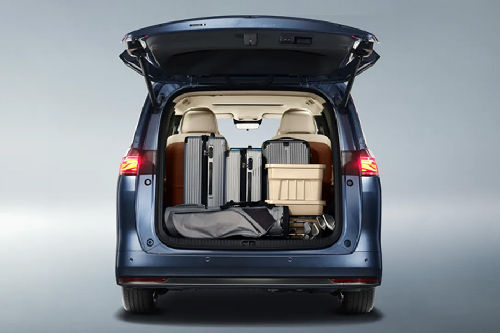
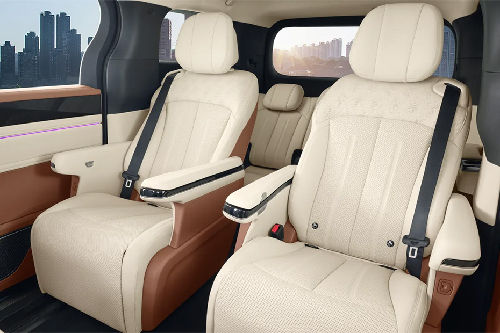
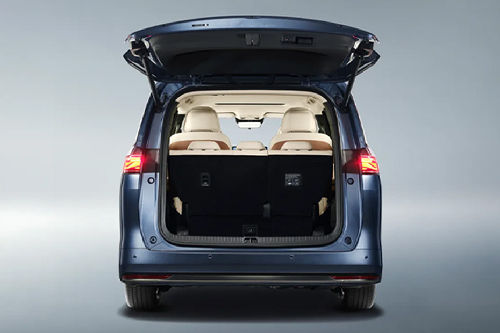
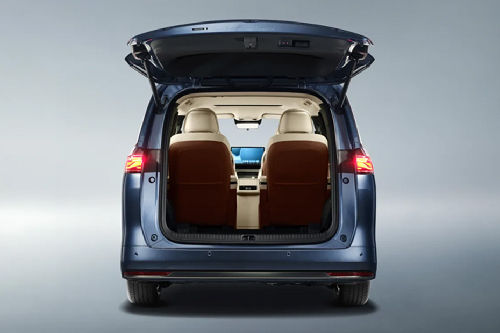
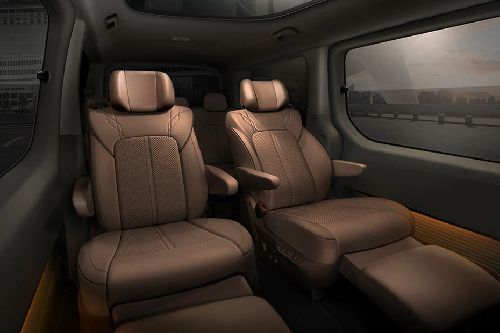
Regarding interior layouts, both the Hyundai Staria HEV and the BYD eMAX 9 DM-i come with three-row seating arrangements with captain seats for their second rows, as well as a bench-type third row that can be stowed for more storage space.
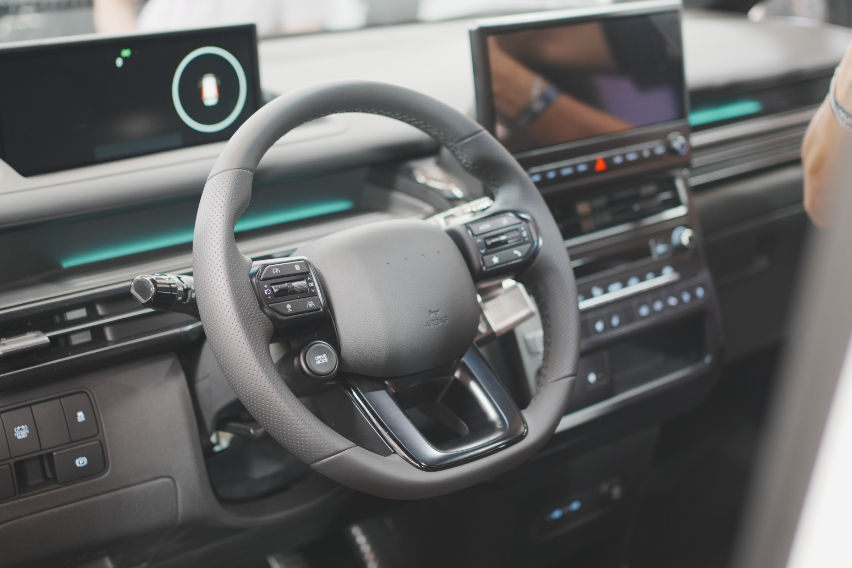 Photo by Juan Paulo Papa
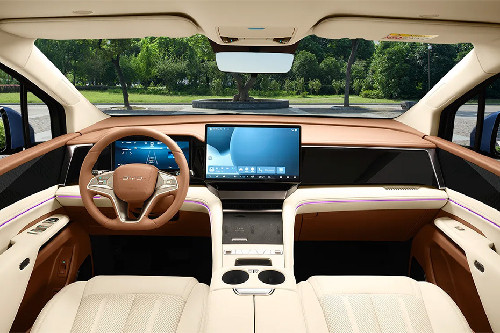
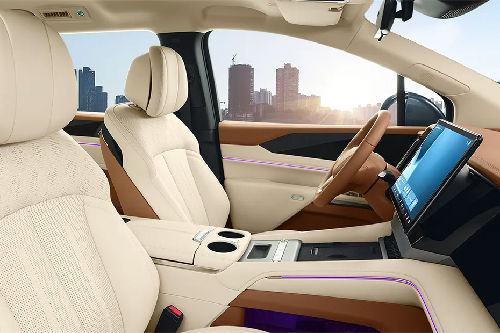
The aforementioned captain seats on both nameplates come with power adjustability and ventilation. However, only the ones on the BYD come with a massage function and power-adjustable leg rests (Ottoman).
Up front, both people carriers have power-adjustable seats. The BYD provides lumbar support for the driver and front passenger, whereas the Hyundai’s driver is the only one who gets this feature.
For the two models, other noteworthy creature comforts include leather upholstery, automatic climate control systems with multiple zone controls, privacy curtains, USB ports, and a wireless smartphone charging pad. Unique to the BYD, however, is a 128-color ambient lighting system and an in-car refrigerator.
Handling navigation and on-board entertainment for the Hyundai Staria HEV is a 12.3-inch touchscreen infotainment system with wireless Apple CarPlay and Android Auto, Bluelink connectivity, and a 12-piece Bose speaker set.
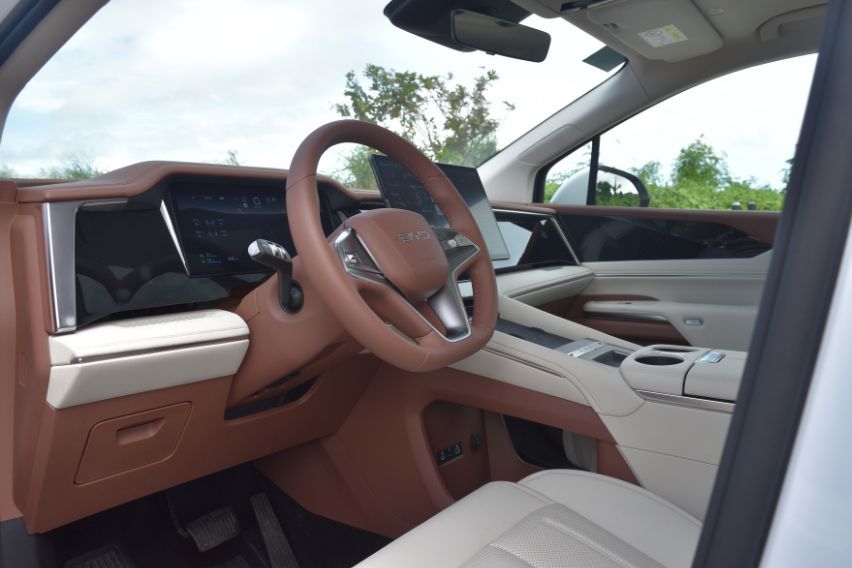 Photo by Cesar Guiderone Miguel
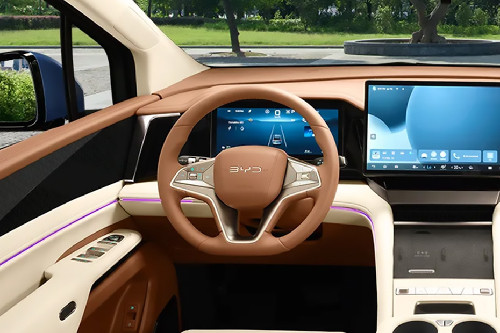
The BYD, meanwhile, comes with a larger 15.6-inch touchscreen infotainment system that also has wireless Apple CarPlay and Android Auto. This display is likewise capable of audio streaming, a voice assistant, and is connected to a generic 12-piece speaker set.
Then again, the BYD model’s infotainment system has several unique capabilities that are present on most of its competitors. It has over-the-air updates, 4G connectivity, and access to the BYD Cloud Service (BYD app).
Concerning driving amenities, both get tilt and telescopic steering columns, a push-to-start button, a drive mode selector, an electronic parking brake with auto-hold, and a 12.3-inch digital gauge cluster. Unique to the BYD eMAX 9 DM-i, of course, is a dedicated button that activates or deactivates its EV mode.
Safety
Moving on to safety, both family-friendly rides get an appropriate amount of passive and active features.
On the Hyundai Staria HEV, its passive kit consists of dual front airbags, side airbags, curtain airbags, anti-lock braking, tire pressure monitoring, electronic stability control, a 360-degree view monitor, and hill-start assist.
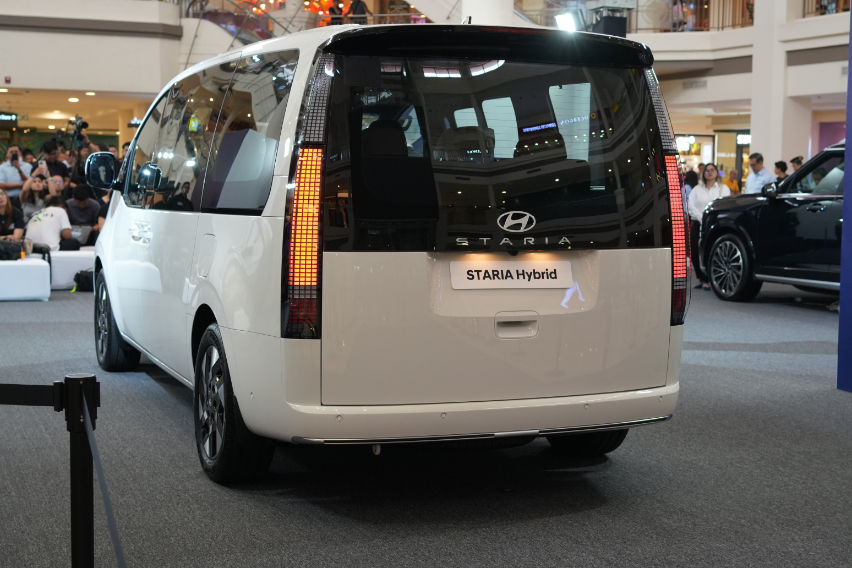 Photo by Juan Paulo Papa
Its array of advanced driver-assist systems (ADAS), meanwhile, consists of smart cruise control with stop and go, lane following assist, lane keep assist, blind spot monitoring with avoidance assist, forward collision avoidance, ISOFIX, and parking distance warning.
In comparison, the BYD eMAX 9 DM-i has dual front, far side, curtain, and middle row side airbags. These go together with roughly the same kit as the Hyundai, but with the addition of hill descent control, a brake override system, brake disc wiping, vehicle dynamic control, and traction control.
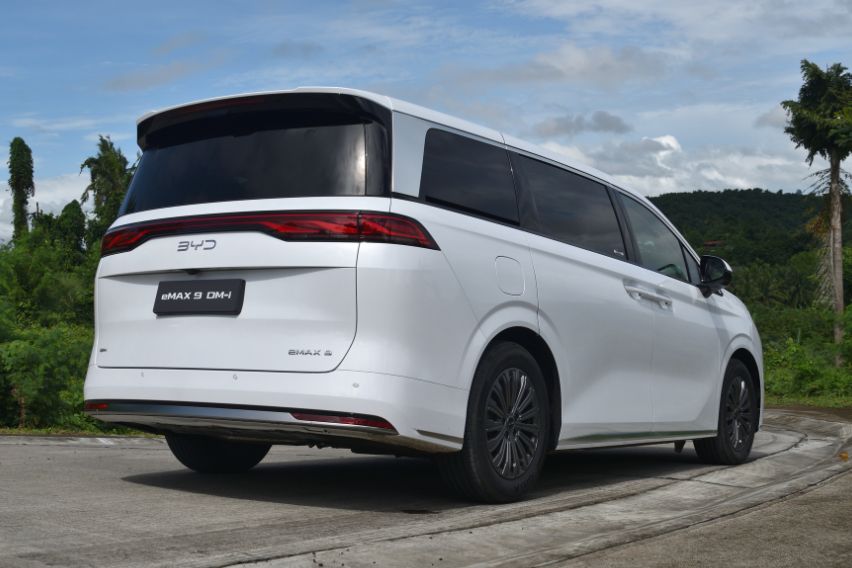 Photo by Cesar Guiderone Miguel
The BYD model’s collection of ADAS features, on the other hand, includes, but is not limited to:
- Automatic emergency braking
- Front and rear collision warning
- Front and rear traffic braking
- Intelligent cruise control
- Intelligent high beams
- Lane departure assist
- Blind spot detection
- Door open warning
- Traffic sign recognition
- Front cross traffic alert and braking
- Emergency lane keep assist
Final thoughts
As far as comfort is concerned, both the Hyundai Staria HEV and BYD eMAX 9 DM-i are clearly winners. The latter, however, does have some additional touches that further elevate its premium factor. This includes its massage captain seats with legrests, a larger infotainment system, an in-car fridge - among others.
Performance-wise, we can say that, at least as far as the spec sheets go, the BYD-made people carrier is the peppier nameplate. Plus, it gets the benefit of being chargeable, which is absent on the closed-loop hybrid system of the Hyundai Staria HEV.
Then there’s the price.
For reference, the Hyundai Staria HEV Premium Plus retails at P3.199 million. This makes it a bit more expensive than the top-spec BYD eMAX 9 DM-i Premium priced at P3.098 million.
So, which of these two electrified three-row vehicles would you prefer?
Also read:
3 reasons to buy the Hyundai Staria HEV
New year, new ride: Hyundai Accent
Family ferries: best vans for the fam
Connect with us through our various social media pages:
Facebook: https://www.facebook.com/ZigWheelsPhilippines
Instagram: https://www.instagram.com/zigwheelsph/

Sell your car at the best price
 Verified and genuine buyers
 Free listing
-
Explore BYD eMAX 9 DM-i
-
-
Explore Hyundai Staria
-



Hyundai Staria Related Stories
- News
- Featured Stories
-
 Hyundai Motor PH revamps Staria lineup with new hybrid variants
MANILA: Hyundai Motor Philippines Incorporated (HMPH) has revamped the local Staria stable with the introduction of hybrid variants. The launch...
Read MoreRuben Manahan IV, Jul 09, 2026 -
Hyundai Motor PH to introduce new Staria Hybrid next month
MANILA: Hyundai Motor Philippines (HMPH) will formally unveil the latest version of the Staria, which will likely come with a...
Read MoreRuben Manahan IV, Jun 29, 2026 -
Hyundai introduces Staria Electric
MANILA: Hyundai has officially launched the all-electric version of the Staria at the ongoing 2026 Brussels Motor Show in Brussels,...
Read MoreCesar Miguel, Jan 13, 2026
-
3 reasons to buy the Hyundai Staria HEV
Hyundai Motor Philippines Incorporated has recently updated the Staria, and as of this publication, the people hauler now has a...
Read MoreCesar Miguel, Jul 13, 2026 -
Kia Carnival vs. the competition
The Kia Carnival has established itself as a popular choice in the local minivan market, offering ample space, modern features,...
Read MoreHazel Nicole Carreon, Jan 08, 2024 -
Lucky stars: What makes the Hyundai Staria award-winning
The Hyundai Staria has once again received the German trade publication Auto Motor Und Sport's "Best Cars" accolade. In the...
Read MoreDylan Afuang, Feb 27, 2023
Hyundai Car Models
-

Hyundai Stargazer -
Hyundai Creta -
Hyundai Tucson -
Hyundai Staria -
Hyundai Custin -
Hyundai H-100 -
Hyundai Santa Fe -
Hyundai Palisade -
Hyundai Ioniq 9 -
Hyundai Elantra



Don't Miss
PIMS 2026


Trending & Fresh Updates
- Latest
- Popular
-

-
-
You are now looking at the Kia PV7Ruben Manahan IV, Sep 15, 2026
-
-
-
Here are MG S5 EV's strengths, weaknessesCesar Miguel, Sep 04, 2026
-
-
First drive: Kia Sportage Turbo HybridCesar Miguel, Aug 18, 2026
-
First impressions: Geely EX2Cesar Miguel, Jun 18, 2026
-
Tips on how to prevent vehicle firesCesar Miguel, Mar 17, 2026
-
How to prepare your car for summerCesar Miguel, Mar 11, 2026
-




-
-
-
-
-
BYD Atto 2 EV vs. the competitionCesar Miguel, Aug 25, 2026
-
EV crossover duel: MG S5 EV vs. GAC Aion VCesar Miguel, Aug 28, 2026
-
First drive: Kia Sportage Turbo HybridCesar Miguel, Aug 18, 2026
-
First impressions: Geely EX2Cesar Miguel, Jun 18, 2026
-
-
How to prepare your car for summerCesar Miguel, Mar 11, 2026
-
Tips on how to prevent vehicle firesCesar Miguel, Mar 17, 2026
You might also be interested in
- News
- Featured Stories
-
-
-
-
Hyundai brings out 5th-gen TucsonRuben Manahan IV, Aug 19, 2026
-
-

-
-
-
Here are MG S5 EV's strengths, weaknessesCesar Miguel, Sep 04, 2026
-
-
EV crossover duel: MG S5 EV vs. GAC Aion VCesar Miguel, Aug 28, 2026
-
Hyundai Featured Cars
- Upcoming
- Popular
-
Hyundai Stargazer₱1.118 - 1.378 Million SRP Price Davao CityMonthly Payments : ₱19,179 x 604.13 (16 Reviews) Get Exclusive Promos
-
Hyundai Creta₱1.134 - 1.379 Million SRP Price Davao CityMonthly Payments : ₱19,454 x 604.27 (22 Reviews) Get Exclusive Promos
-
Hyundai Tucson₱1.68 - 2.29 Million SRP Price Davao CityMonthly Payments : ₱28,821 x 604.46 (35 Reviews) Get Exclusive Promos
-
Hyundai Custin₱1.77 - 2.08 Million SRP Price Davao CityMonthly Payments : ₱30,365 x 604.33 (9 Reviews) Get Exclusive Promos
-
Hyundai H-100₱1.136 - 1.355 Million SRP Price Davao CityMonthly Payments : ₱19,488 x 604.23 (22 Reviews) Get Exclusive Promos
Latest Hyundai Staria Car Videos on Zigwheels

-
Our Best Small EV (So Far!) | Z-List Monthly Wrap | July 202614 Aug, 2026 .
-
2025 Hyundai Staria 2.2 CRDi Walkaround | Zigwheels.Ph20 Jul, 2026 .
Compare & Recommended
Hyundai Staria
₱1.56 - 3.03 Million
Staria Price
|
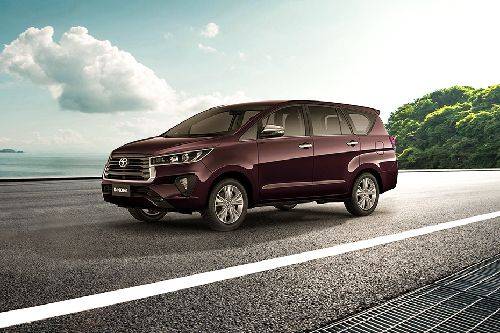
|
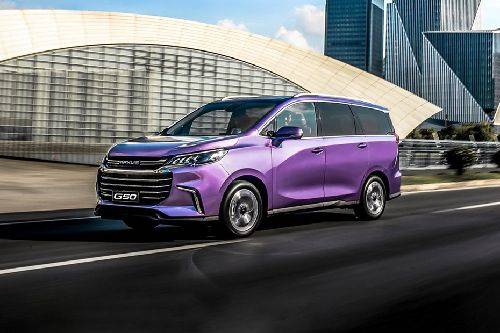
|
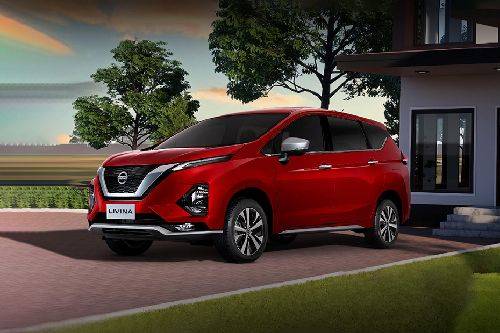
|
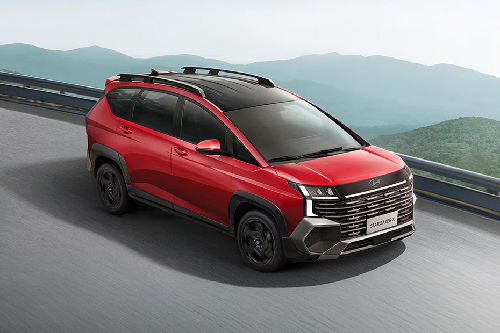
|
|
Fuel Type
Diesel
|
Diesel
|
Gasoline
|
Gasoline
|
Gasoline
|
|
Engine
2199
|
2755
|
1349
|
1498
|
1497
|
|
Power
175
|
168
|
161
|
104
|
113
|
|
Transmission Type
Manual
|
Manual
|
Manual
|
Manual
|
CVT
|
|
|
Trending MPV
- Latest
- Upcoming
- Popular
-
GAC E8 HEV₱1.858 - 1.998 Million SRP Price Davao CityMonthly Payments : ₱31,874 x 60Write a Review Get Exclusive Promos
-
GAC GN6₱1.198 Million SRP Price Davao CityMonthly Payments : ₱20,552 x 604.3 (10 Reviews) Get Exclusive Promos
-
VinFast VF MPV 7₱1.239 - 1.518 Million SRP Price Davao CityMonthly Payments : ₱21,255 x 604 (1 Reviews) Get Exclusive Promos
-
GAC GN8 PHEV₱3.488 Million SRP Price Davao CityMonthly Payments : ₱59,838 x 605 (1 Reviews) Get Exclusive Promos
-
VinFast Limo Green₱1.099 - 1.399 Million SRP Price Davao CityMonthly Payments : ₱18,853 x 604 (1 Reviews) Get Exclusive Promos
-
Denza D9₱4.298 Million SRP Price Davao CityMonthly Payments : ₱73,734 x 604 (1 Reviews) Get Exclusive Promos
-
Toyota Avanza₱844,000 - 1.071 Million SRP Price Davao CityMonthly Payments : ₱14,479 x 604.28 (91 Reviews) Get Exclusive Promos
-
Toyota Innova₱1.267 - 1.814 Million SRP Price Davao CityMonthly Payments : ₱21,736 x 604.37 (97 Reviews) Get Exclusive Promos
-
Suzuki Ertiga Hybrid₱1.178 Million SRP Price Davao CityMonthly Payments : ₱20,209 x 604.15 (26 Reviews) Get Exclusive Promos
-
Mitsubishi Xpander Cross₱1.378 Million SRP Price Davao CityMonthly Payments : ₱23,640 x 604.3 (37 Reviews) Get Exclusive Promos
-
Hyundai Stargazer₱1.118 - 1.378 Million SRP Price Davao CityMonthly Payments : ₱19,179 x 604.13 (16 Reviews) Get Exclusive Promos
-
MG G50 Plus₱1.049 - 1.289 Million SRP Price Davao CityMonthly Payments : ₱17,993 x 604.2 (10 Reviews) Get Exclusive Promos

Hyundai Staria Car Articles From Carmudi
- journal
-
Hyundai revises Staria roster in PHRuben Manahan IV, Jul 09, 2026
-
HMPH turns over Staria MPVs to DOST-STIIPaulo Papa, Dec 20, 2023
-
Hyundai Motor PH presents 9-seater StariaPaulo Papa, Oct 16, 2023
-
Hyundai Staria wins ‘Best Cars’ award anewRuben Manahan IV, Feb 22, 2023